


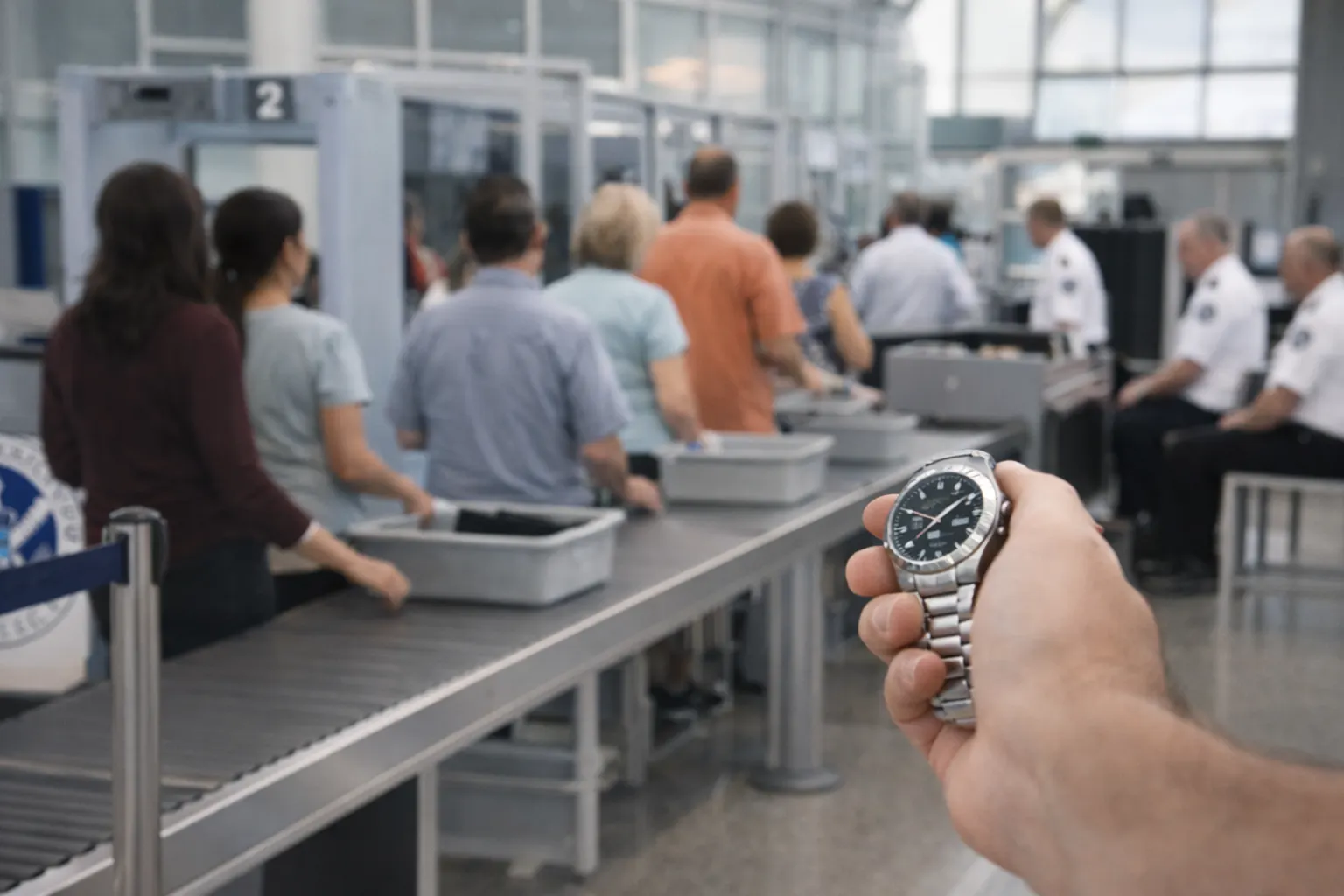
Do you have travel plans in your not-too-distant future? If so, you may wonder, can airport security damage your watch? This is a genuine concern, as your watch will be exposed to magnetic and radiated fields.
Well, here’s the spoiler alert. There is little risk of your watch being damaged. This article will address many beliefs concerning airport security and watches to allay your fears.

Why People are Concerned About Watch Damage Going Through Airport Security
In this section, we’ll review airport security concerns and explain when you should, and shouldn’t, be concerned.
X-Ray Scanners and Radiation
- The Concern: People may be afraid to expose their watches to X-ray scanners because the radiation can damage certain batteries, ISO film, and medical devices.
- The Truth: X-ray scanners use extremely low doses of radiation. That, compared with the minimal exposure time, isn’t enough to damage your watch. Most watches are designed to handle much higher levels of radiation.

Metal Detectors and Magnetism
- The Concern: Both metal detectors and hand-held wands are magnetic. People fear that their watches will become magnetized and that the steel parts will malfunction.
- The Truth: As with radiation, the magnetic force used in these devices is extremely low. Additionally, the short exposure time is not enough to cause damage. Modern watches are also typically constructed with high magnetic resistance to protect them from harm.
Physical Damage When Going Through Scanners
- The Concern: Your watch will be damaged if you place it in the tray before walking through airport security.
- The Truth: This is more likely to occur than radiation and magnetic damage. However, it can be avoided by placing the watch in the tray carefully, not combining it with objects that can scratch or crush it, or even putting it in a soft pouch beforehand.
Theft When Going Through Scanners
- The Concern: You take your watch off and place it in the tray. It is stolen during security screening.
- The Truth: Theft is extremely rare at airport security checkpoints. However, if you are concerned, take your watch off immediately before going through the scanner, and pick it up immediately afterward. Better yet, ask if you can leave it on.
Lost Luggage or Damage While Packed in a Suitcase
- The Concern: Your watch is damaged while packed in a suitcase, or your luggage is lost, which separates you from your lovely watch and increases the risk of theft.
- The Truth: These incidents are sporadic, but travelers can prevent them by keeping their watch on their person or in carry-on luggage. Any watch that is not worn should be carefully protected in a hard case.
Travel Tips for Luxury Watches
Airport security may not pose much of a risk to luxury watches, but general travel can. For collectors who travel frequently, understanding how much your watch is worth can also be helpful when deciding which pieces to insure or bring along on a trip.
With that in mind, here are some tips that will keep your watch safe.
Be Aware of Magnets
The magnetic fields in airport security shouldn’t damage your watch, but tablets and iPad covers, phone cases with magnetic clasps, handbag and backpack closures, and some laptop and Bluetooth speakers can. Ensure you don’t pack your watch with any of these devices.
Anti-Theft Tips
- It’s best to wear your watch rather than leave it in the hotel room, but if you do leave it behind, keep it in the safe.
- Avoid wearing the watch in crowded and unsafe areas.
- Document your watch with photos, serial numbers, paperwork, and receipts in case it is stolen.
- Consider purchasing insurance for your watch.
Daily Wear
When traveling, you may engage in activities that increase the risk of damaging your watch. Avoid wearing it if you plan to rock climb, work out in a gym with metal equipment, or play contact sports. Ensure your watch has high water resistance before swimming, scuba diving, or relaxing in the sauna.

Bring the Right Accessories
The right accessories will ensure your watch is cared for while you travel. Consider bringing:
- A microfiber cloth to wipe down dirt and oil buildup
- A soft or hard case (or both) to protect your watch when it’s not being worn
- Portable watch winders- these keep automatic watches running during extended travel
Is There a Best Type of Watch for Travel?
While there isn’t a single “best” watch for travel, certain styles tend to work better than others. Watches designed with durability, comfort, and versatility in mind are often easier to live with on the road. Features like solid water resistance, good legibility, and secure bracelets or straps matter more than complications when you’re moving through airports, hotels, and unfamiliar environments.
Many travelers gravitate toward steel sport watches or simple GMT models, which offer practicality without drawing unnecessary attention. Others prefer understated time-only watches that are comfortable to wear all day and easy to keep secure. Ultimately, the best travel watch is one you can enjoy wearing without worrying about every scratch or bump along the way.
Precision Watches is Your Source for Authorized Repairs
It’s improbable that your watch will be damaged when going through airport security, but if anything happens at checkpoints or during any stage of your travel, Precision Watches is here to help. Our in-house team provides professional watch repair, from simple battery replacement to complete movement overhauls, ensuring your timepiece is properly inspected and cared for. And, if you decide it’s time for a new watch, we have a wide selection of new and pre-owned timepieces.
Visit our Lower Gwynedd, PA, showroom or shop online to learn more about our products and services.
FAQs
1. If scanners are safe, why do some people say their watches stopped after security?
There are some stories about watches that have stopped working after going through airport security. Rather than magnetism or radiation, the underlying cause was likely a pre-existing mechanical issue or rough handling.
2. Are vintage or antique watches more at risk at airport security?
Vintage and antique watches are not at higher risk from scanners, but they are more vulnerable to knocks and drops, rough handling in trays, and being jostled in luggage.
3. Do I need to remove my watch at security?
You may need to remove your watch at security, depending on TSA watch rules and detector sensitivity. Many metal detectors allow thin or small watches without an alarm. However, if staff members ask you to remove it, place it in a tray.
4. Can airport security scanners erase data or settings on a watch?
No, the low radiation levels and magnetic fields in airport security scanners will not erase your data or settings.
5. What is actually the biggest risk to my watch at the airport?
The biggest risks to your watch include scratches and dings from the tray and other objects, drops during removal and retrieval, misplacement or theft when it’s off your wrist, and loss or theft from checked luggage.


