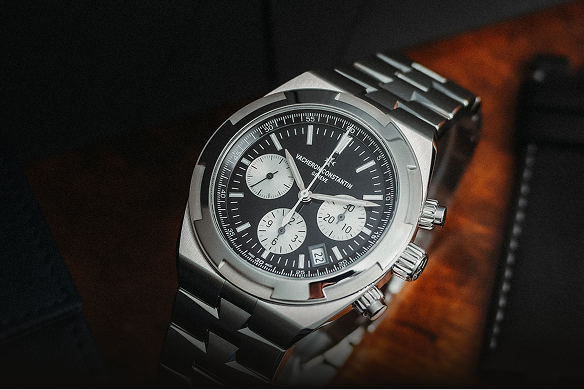
A vintage watch is a unique timepiece. It preserves a moment in time, capturing a style that evokes nostalgia. The watch must be treated with the utmost care during repairs and restoration, which only an authorized dealer like Precision Watches can provide.
This article breaks down our approach to vintage watch restoration to ensure a successful result.
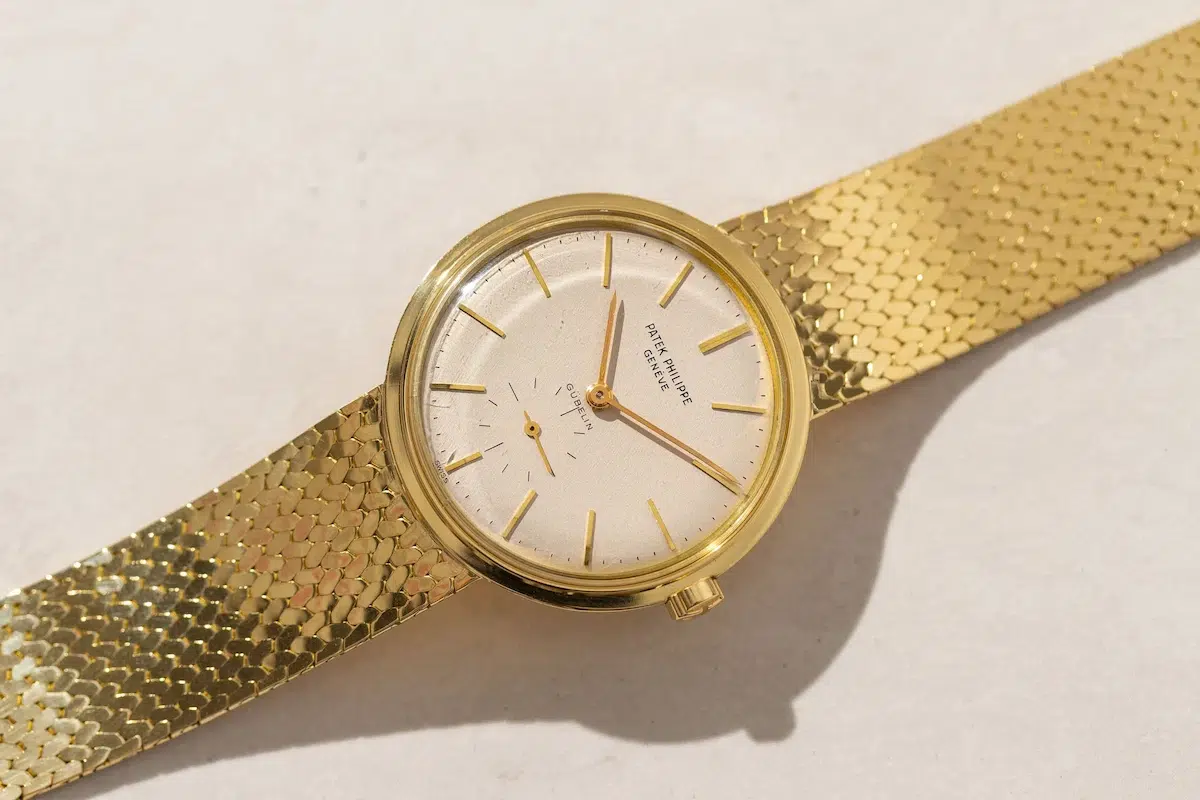
What Does Vintage Watch Restoration Entail?
Vintage watch restoration goes beyond regular repair, ensuring the watch retains its value and historical status, while improving functionality. Here is the process typically involved:
- Initial Assessment: The dealer will inspect the watch to determine what needs to be replaced and whether a complete cosmetic repair is necessary, rather than ‘service only’.
- Disassembly: The watch is fully disassembled, and the movement is stripped.
- Cleaning and Inspection: The parts are cleaned in a professional cleaning machine with specialized solutions. Each component is inspected to determine if replacement is necessary.
- Repair and Parts Replacement: New mainsprings are often needed in vintage watches. The dealer may also replace worn jewels and brushings, bent wheels, and cracked crystals. They will ensure that all new parts are authentic and make or modify parts as needed.
- Lubrication and Reassembly: The watch is reassembled and lubricated at specific points.
- Testing: The final step involves placing the watch on a timing machine to adjust the rate and ensure it runs properly in multiple positions.

Why Does a Vintage Watch Require Specialized Care?
A dealer must use a specialized approach when they restore vintage timepieces for the following reasons:
- Delicate Aging Components: Quick fixes can easily damage brittle parts. Gentle handling is necessary.
- Scarcity of Original Parts: The original parts of a vintage watch are often scarce, and replacing them with inauthentic parts can reduce the watch’s value. A specialist will source period-correct components to ensure they don’t degrade the watch.
- Preserving the Patina: Vintage watches often develop a patina over time, which attests to their authenticity and originality. Technicians must ensure they do not polish out the patina, as doing so could reduce the watch’s value.
- Brand and Era-Specific Techniques: Watches from different brands and eras may have design quirks that require specialized tools and approaches only an authorized dealer understands.
- Accuracy and Reliability: Vintage watch restoration requires regulating and testing the watch over days to ensure it keeps time accurately.
- Water Resistance: Many vintage watches lose their water resistance over the years. Specialized services include replacing the gaskets when necessary to ensure moisture doesn’t damage the dial or movement.
- Historical and Sentimental Watches: Beyond market value, vintage watches have historical and sentimental significance that can be preserved only with a specialized approach.

Common Vintage Watch Repair Work
Vintage watches also require repairs over time, which may be performed separately or as part of a bigger restoration. Common repairs include:
- Case Refinishing: The case is polished with compounds and wheels. Bead blasting can achieve a matte finish. The process may also include dent repairs, hammering, and replating golf-filled cases.
- Crystal Repairs. Scratches may need to be polished out. In some instances, a full replacement is necessary.
- Dial and Hand Restoration: Dials and hands may require cleaning, refinishing, repainting numerals and markers, and hand straightening.
- Crown, Stem, and Band Work: Crowns, stems, sleeves, tubes, and gaskets may need to be replaced to ensure functionality and water resistance. Straps and bracelets may require restoration or replacement.
- Specialized Techniques: These include patina-preserving, micro-fabrication, part adaptation, and conservative case work.
For owners who want to understand the broader scope of servicing beyond restoration, you may find our comprehensive guide to professional watch repair services helpful. It explains how expert watchmakers diagnose issues, source parts, and maintain accuracy over time.
Why Choose Precision Watches to Restore Vintage Timepieces
Vintage watches are prized possessions. Don’t trust their restorations to just anyone. A trusted name like Precision Watches ensures optimal outcomes.
Watchmakers since 1946, we have seen watches evolve through the decades, developing an innate understanding of vintage timepiece mechanics. As authorized dealers, we will never do anything that compromises the integrity of your watch. We utilize specialized tools and techniques, with a customized approach for each brand and model.
Our shop also carries a wide range of our latest luxury timepieces and authenticated pre-owned models, which are available for purchase in our Lower Gwynedd showroom and online. We offer extensive watch repair services for vintage watches, modern watches, and everything in between. Contact us for all your watch ownership needs.
To learn more about how our technicians service luxury Swiss timepieces, visit our article on expert Swiss watch repair at Precision Watches, which details our process and capabilities.

FAQS
1. How long does vintage watch restoration take?
Vintage watch restoration can take 4-8 weeks, including parts sourcing, testing, and quality checks over multiple days. However, the time frame varies by condition and complexity. Rush services may be available for an additional fee.
2. How often should a vintage watch be serviced?
Most vintage watches only need a full service about every 5 years, and in many cases, even less often. If the watch is keeping good time and functioning normally, you do not need to service it proactively.
Instead, pay attention to performance changes. If the watch begins losing or gaining more time than usual, shows signs of moisture, or feels different when winding or setting, those are indicators that a service is needed. Regular observation is the best guide; service the watch based on performance, not just the calendar.
3. Should I polish or refine the case on a vintage watch?
Light geometry-correct polishing to remove scratches is okay. However, you should avoid over-polishing, which may impact the patina and, hence, the watch’s collector value.
4. Can I restore a vintage watch myself?
Basic cleaning with tools like case openers and microfiber cloths may improve the watch’s appearance and functionality. However, a complete restoration should only be carried out by an authorized professional. DIY methods can devalue the watch and lead to damage.
5. How do I choose a vintage watch restorer?
Choose a specialist who has experience with your brand and uses period-correct parts and specialized tools. Check reviews and discuss pricing to determine which provider best suits your needs.
6. Can vintage watches be made water-resistant again?
Partially. Replacing gaskets and seals and pressure testing help, but typically these processes only make the watch splash-resistant. They will rarely make the watch water-resistant by modern standards.
7. Is it worth servicing an older watch?
In many cases, yes—especially if the watch has sentimental value or is worn regularly, as servicing helps preserve mechanical health and prevent further wear. A professional evaluation can determine whether light maintenance or more involved restoration is appropriate.