When Neil Armstrong’s gold Omega Speedmaster sold for more than $2 million, the result went far beyond a headline or record price. For collectors, the sale became a powerful reminder of how provenance, originality, and historical significance can elevate a watch far beyond its materials alone.
While gold Speedmasters are already uncommon, this particular example stood apart because of its direct connection to one of the most important figures in space exploration. The sale offers a clear case study in what truly drives long-term collectibility—and why certain watches transcend traditional market expectations.
About the Speedmaster
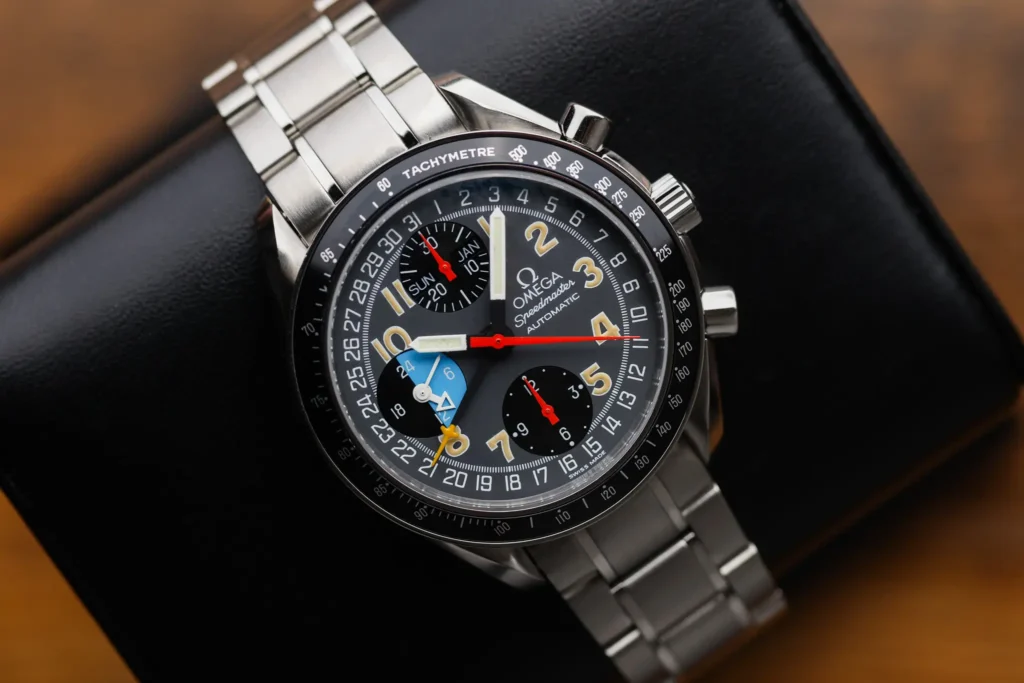
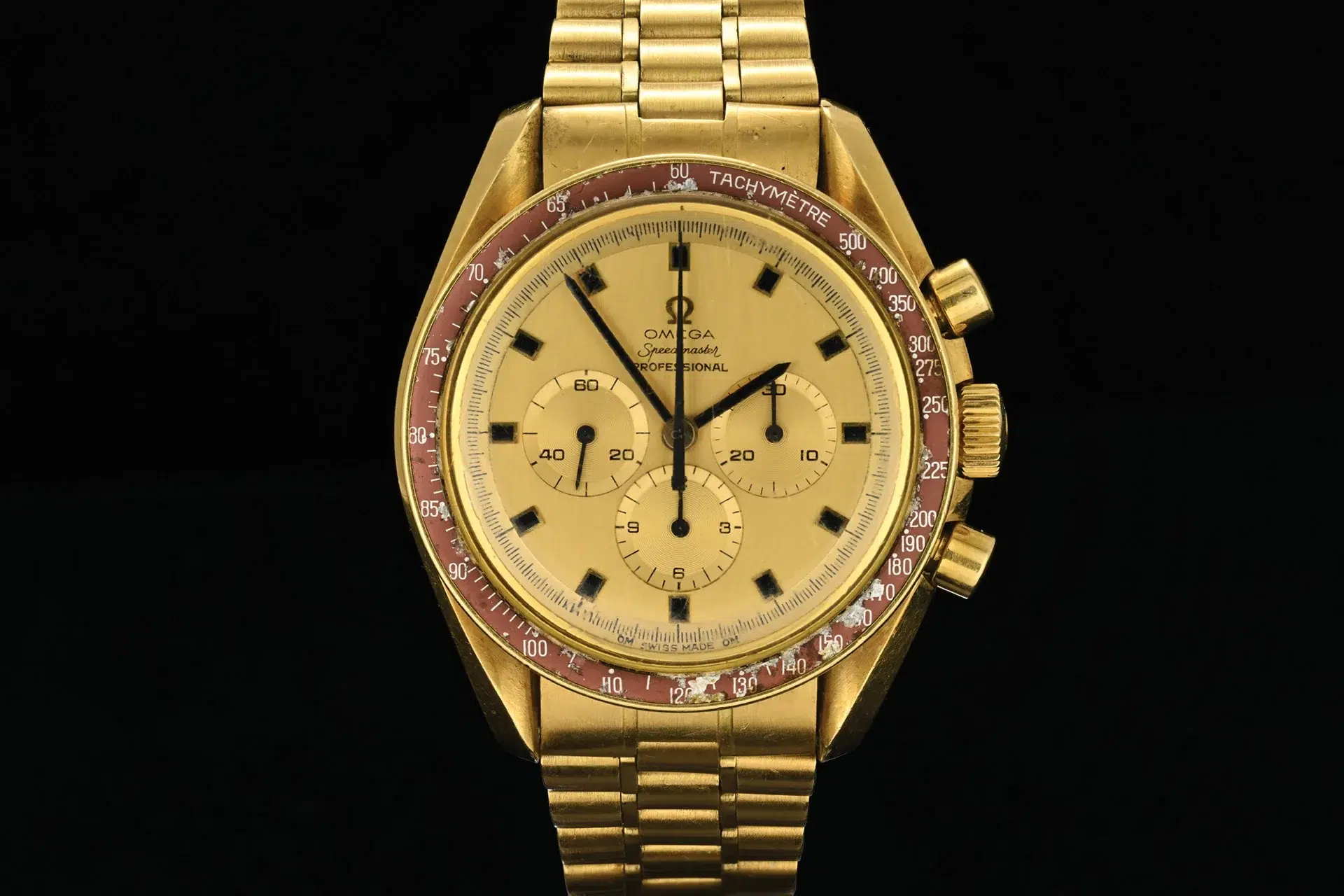
Omega released the Speedmaster line in 1957 as a racing/technical watch. It was not explicitly designed for space travel. Key features include a tachymeter bezel for measuring speed, a high-contrast dial for optimal legibility, and a robust, shock-resistant case and movement.
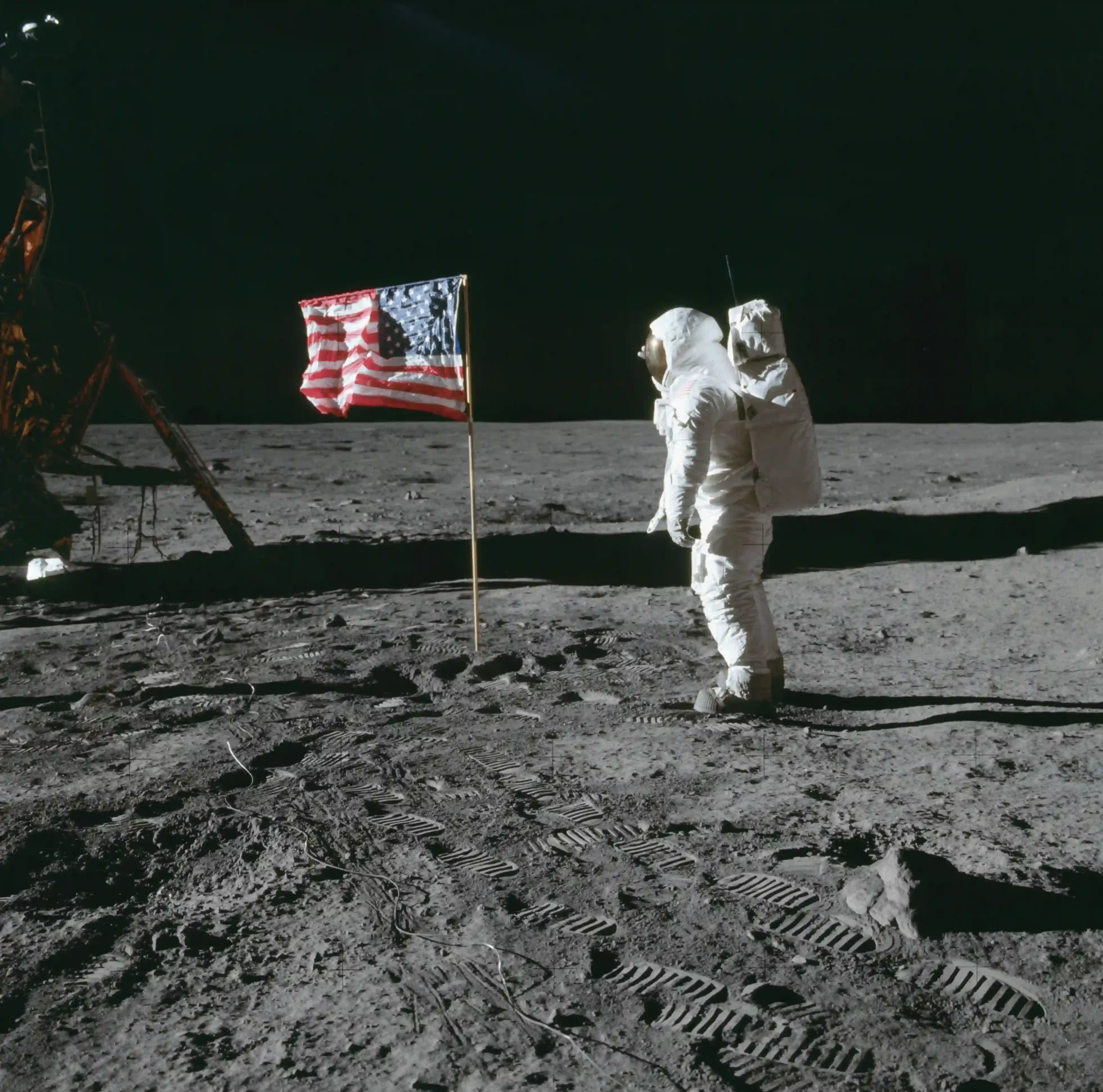
In the mid-1960s, NASA tested chronographs under harsh conditions to determine which were qualified for space travel. The Speedmaster passed every test and was officially approved for all manned space missions in 1965. It became the first watch worn on the moon when Buzz Aldrin wore it on his space mission.
As one of the brand’s most iconic models, the Speedmaster remains a central part of the broader Omega watch collection, representing Omega’s long-standing focus on precision, durability, and functional design.
Why Neil Armstrong’s Gold Speedmaster Matters to Collectors
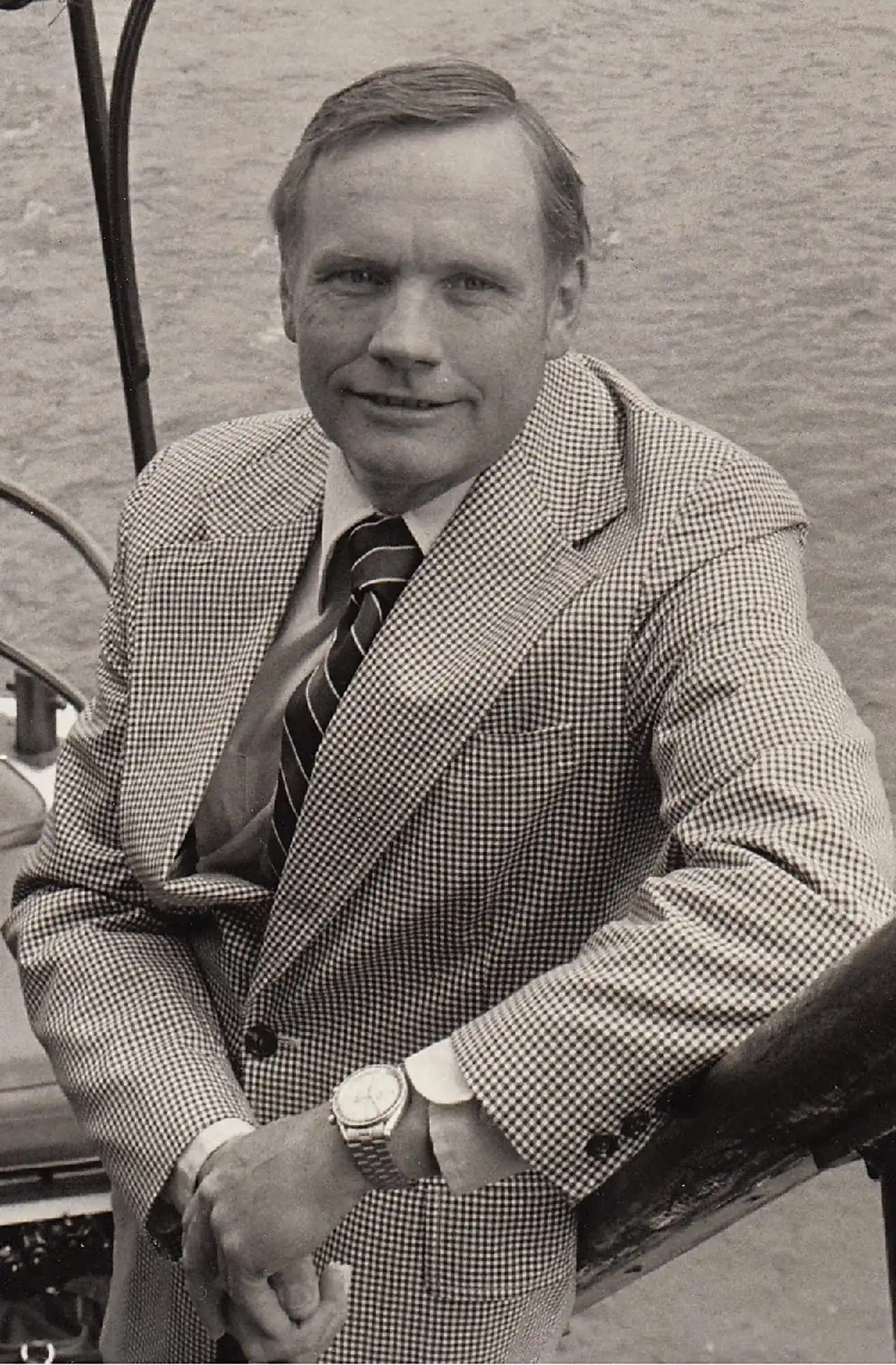
This sale isn’t significant simply because of the price or the precious metal case. What pushed Neil Armstrong’s Speedmaster into record territory was provenance—ownership that cannot be replicated, paired with strong documentation and originality.
For collectors, the watch reinforces an important distinction: not all historically styled watches carry the same weight as those directly tied to pivotal moments or individuals. In this case, the engraving, presentation history, and Armstrong’s personal connection transformed the watch from a rare Omega into a museum-level artifact.
It also serves as a reminder that headline auction results don’t reset the value of an entire model line. While this Speedmaster represents the extreme end of collectibility, its sale highlights how condition, originality, and historical relevance intersect to define true long-term value.
The Speedmaster Neil Armstrong Watch
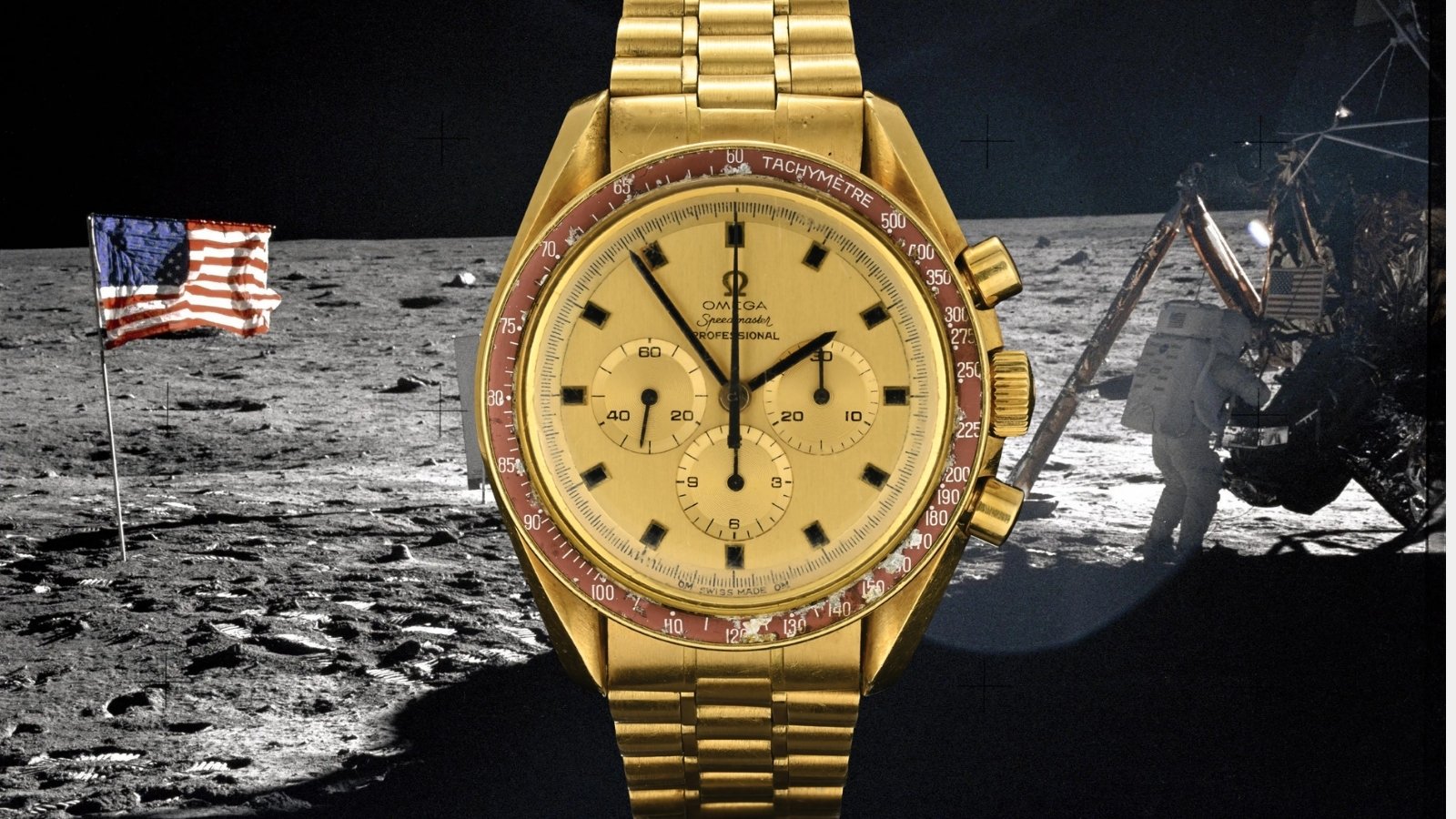
Omega continued to support NASA and created Speedmaster Professional models as a tribute to astronauts and the space program’s many achievements. They made just over 1,000 of these models and gifted the first 30 to astronauts in the space program to celebrate the Apollo 11 moon landing. The watches were given out at an Astronaut’s Appreciation gala dinner on Nov. 25, 1969, in a crater replica case, and each bore a personalized engraving. While the gold Speedmaster reference BA 145.022 was not worn on the Moon, it remains closely tied to that historic era.
The watches offered common features such as:
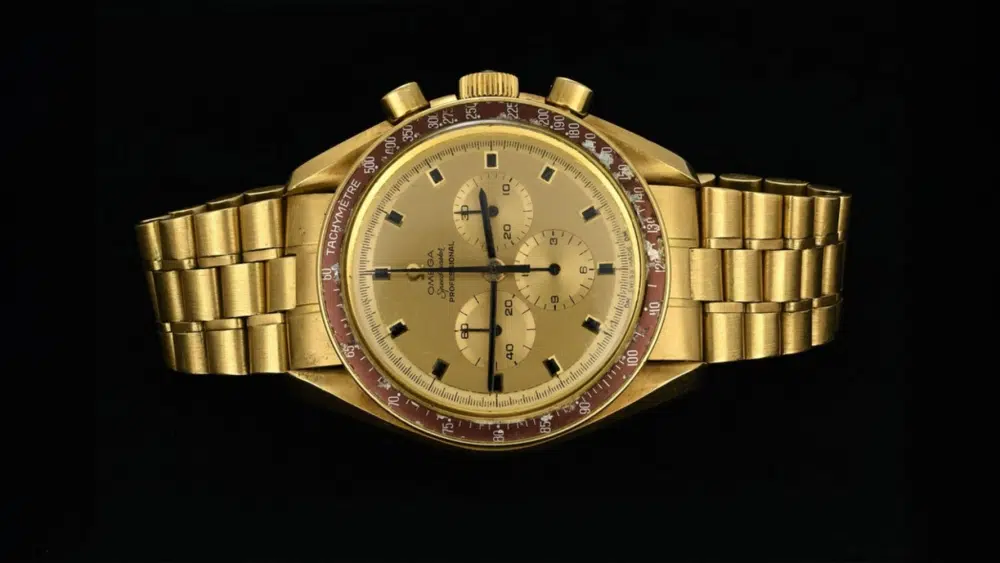
- A 42mm 18K yellow gold asymmetrical case with crowns
- A burgundy red tachymeter insert
- A dot over 90 on the bezel, an early Speedmaster feature prized by collectors
- A solid gold dial
- Applied onyx hour markers set in gold frames
- Black hands with gold bases for contrast
- Omega caliber 861 manual chronograph movement
- A matching 18K gold bracelet with hollow links and a distinctive striped clasp, typical of the era
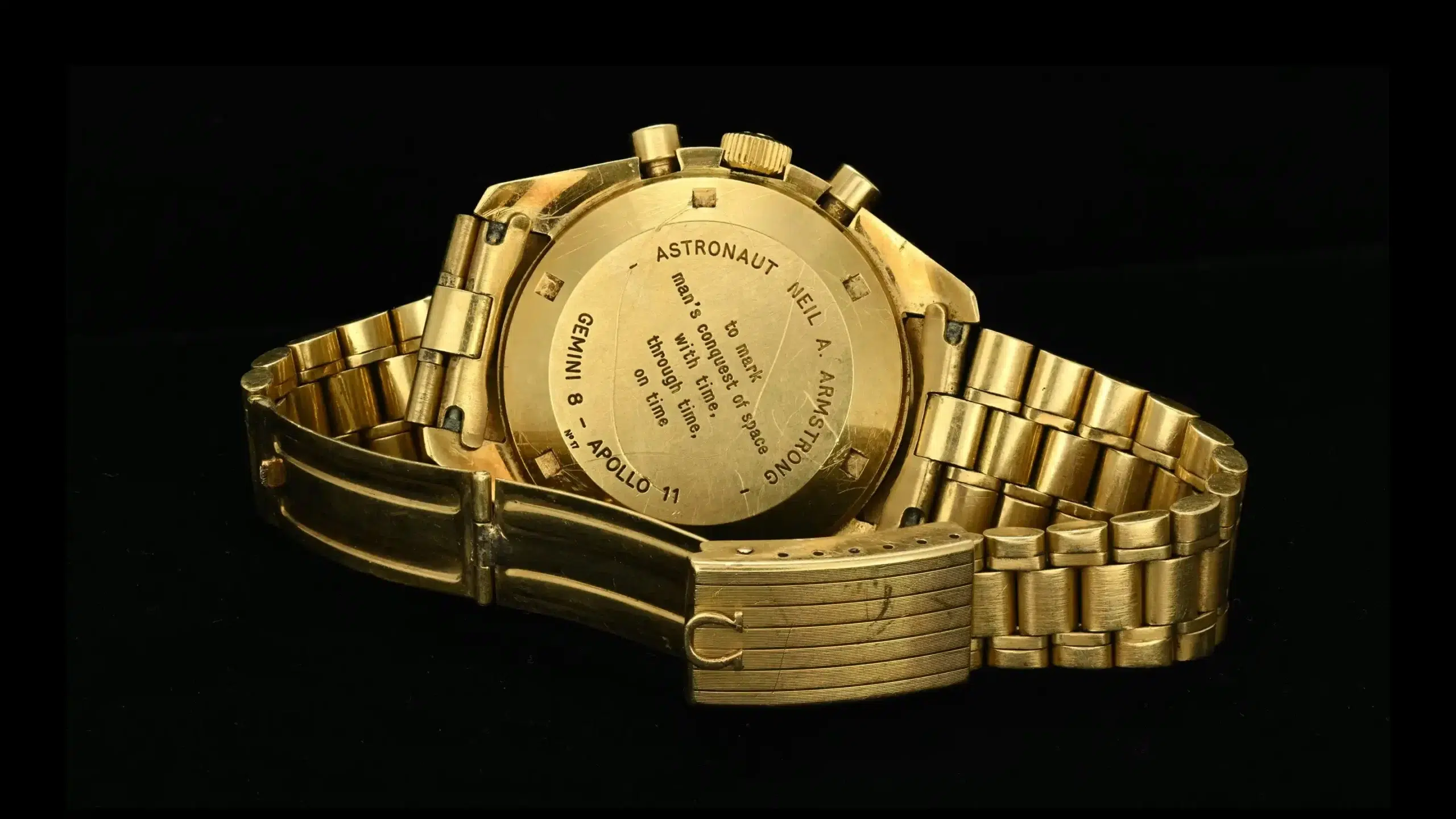
Armstrong’s model features a unique engraving as follows:
- Astronaut Neil A. Armstrong, Gemini 8 – Apollo 11 (his name and missions)
- To mark man’s conquest of space with time, through time, on time.”
The Gold Speedmaster Auction
Neil Armstrong’s gold Omega Speedmaster was offered as part of RR Auction’s Space Exploration sale, a themed event focused on historically significant spaceflight artifacts. The watch quickly became the centerpiece of the sale, drawing strong interest from collectors and institutions alike.
After competitive bidding, the watch achieved a final sale price of approximately $2.1 million, setting a new record for a Speedmaster at auction and surpassing previous astronaut-owned examples. The watch was consigned by Armstrong’s son, Mark Armstrong, who noted that a portion of the proceeds would support charitable causes his father cared deeply about.
While the identity of the buyer was not disclosed, the result underscored the watch’s status as a museum-level artifact rather than a typical collectible, driven by its provenance, originality, and historical importance.
Precision Watches- Your Source for Luxury Timepieces
High-profile sales like this underscore how much nuance goes into evaluating a watch properly. Factors such as originality, condition, documentation, and historical context often matter just as much—if not more—than brand or materials alone. Understanding those details is essential when assessing a watch’s true place in the market.
For collectors and owners alike, determining value requires a careful, informed approach. Resources like our guide on how much is my watch worth can help explain how professionals weigh these factors, especially when provenance or rarity plays a role. In-person evaluations and hands-on experience with historically important timepieces remain critical to reaching accurate conclusions.
FAQs
1. What exactly was the watch that sold for $2.1 million?
The watch was Neil Armstrong’s 18K gold Omega Speedmaster Professional, reference BA 145.022. It was gifted to him by Omega in 1968 as a special Tribute to Astronauts Apollo 11 commemorative watch, engraved with his name and missions.
2. What is special about this model compared to regular Speedmasters?
This model is special because it features a gold case and bracelet instead of steel. Rather than a black dial with a standard caseback, it offers a gold dial with onyx hour markers and a burgundy tachymeter bezel. Most notable is a personalized caseback engraving stating Armstrong’s name, mission, and a commemorative inscription.
3. Did Neil Armstrong wear this watch in space?
No, on Apollo 11, he wore a NASA-issued steel Speedmaster, which is now in the Smithsonian. The gold Speedmaster was a post-mission gift from Omega that Armstrong wore in his personal life, including his years as a university professor.
4. Why is Neil Armstrong’s gold Speedmaster so special?
Neil Armstrong’s gold Speedmaster is special because it belonged to a historic owner, is a featured and iconic model, and was personally presented to him by Omega and worn by him for years.
5. What is RR Auction’s Space Exploration sale?
RR Auction’s Space Exploration sale is a recurring themed auction offering space-flown artifacts, astronaut-worn items, autographs, mission patches, checklists, and other NASA and Soviet Russian memorabilia. The April 2025 sale was especially notable due to the record-setting sale of Neil Armstrong’s watch.
6. Why did the Armstrong family decide to sell it?
Neil’s son, Mark Armstrong, said the family decided to sell the watch to share his father’s legacy with collectors and institutions and support the charitable causes his father cared about.