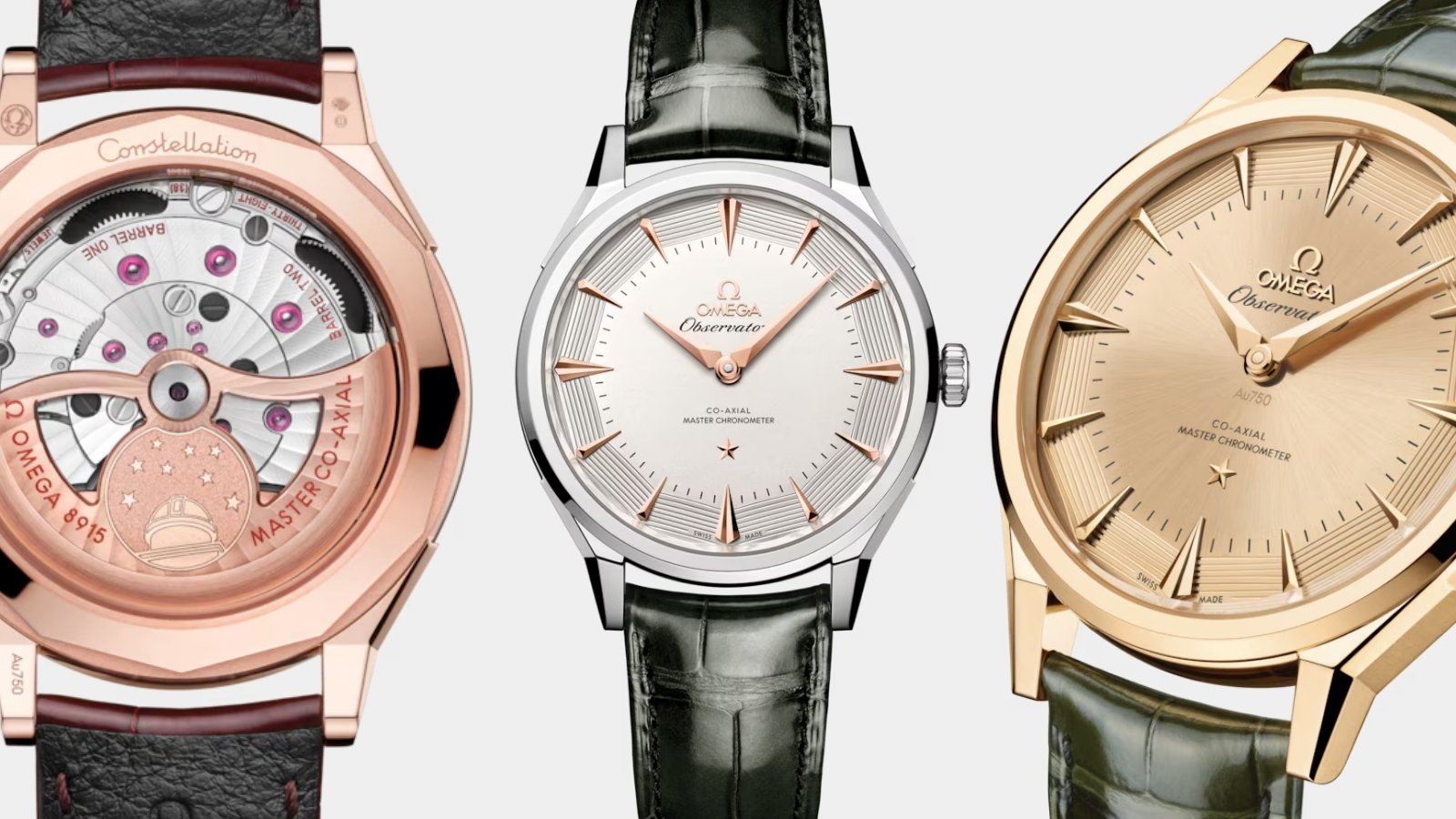
The new Omega Constellation Observatory collection is the first two-hand watch to achieve Master Chronometer certification, making it one of Omega’s most technically significant dress-watch launches in years. Made possible by a new acoustic testing method developed at Omega’s Laboratoire de Précision and certified by METAS, the collection combines a major precision milestone with a more heritage-driven Constellation design. With pie-pan-inspired dials, dog-leg lugs, and new two-hand calibers, the Omega Constellation Observatory brings chronometric innovation and classic style together in a way that feels especially compelling for 2026.
There was also an early clue before the official launch. Omega appears to have teased the watch on Delroy Lindo’s wrist at the 2026 Oscars, where a gold-on-gold dress watch with pie-pan styling and no Manhattan-era claws immediately sparked speculation about a return to the Constellation’s earlier design language. Now that the Observatory collection is official, that red-carpet appearance looks less like a coincidence and more like a deliberate preview. Readers who missed that first sighting can also see it in our roundup of the best watches from the 2026 Oscars red carpet.
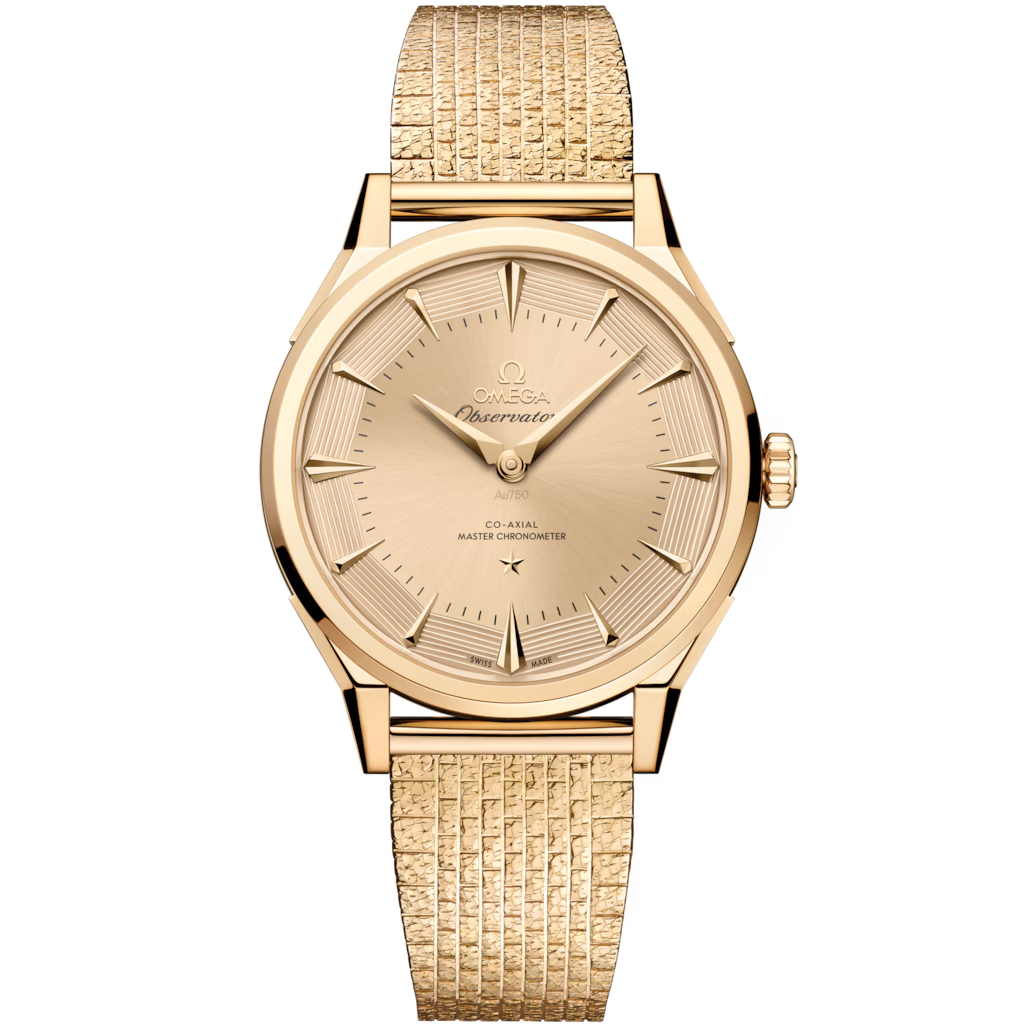
The New Omega Constellation Observatory Brings Mid-Century Constellation Design Back Into Focus
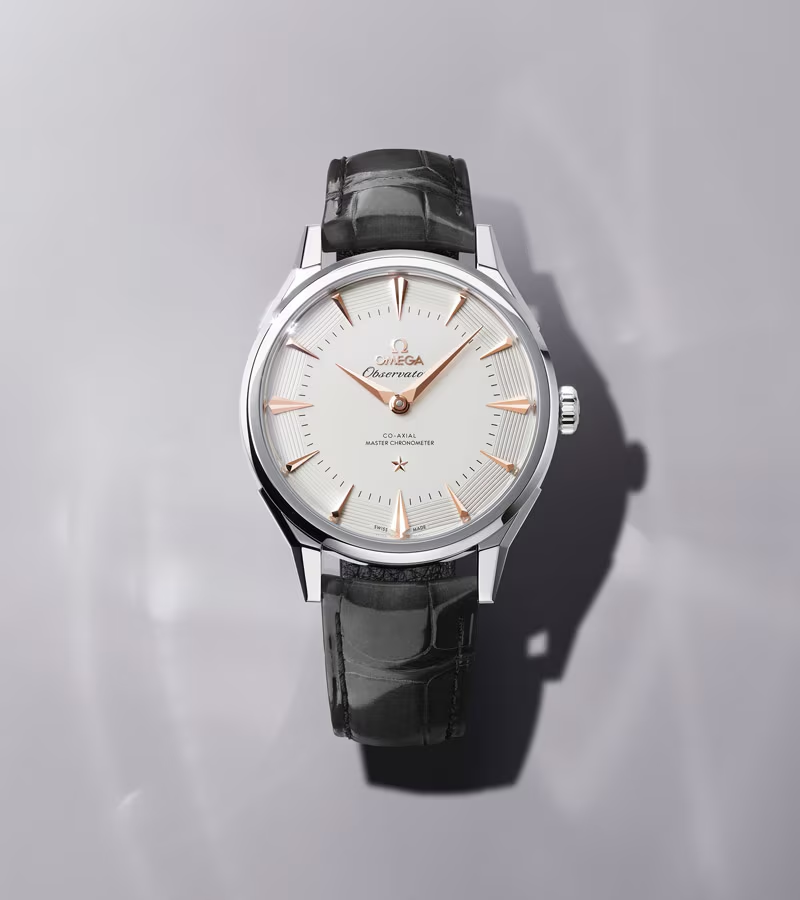
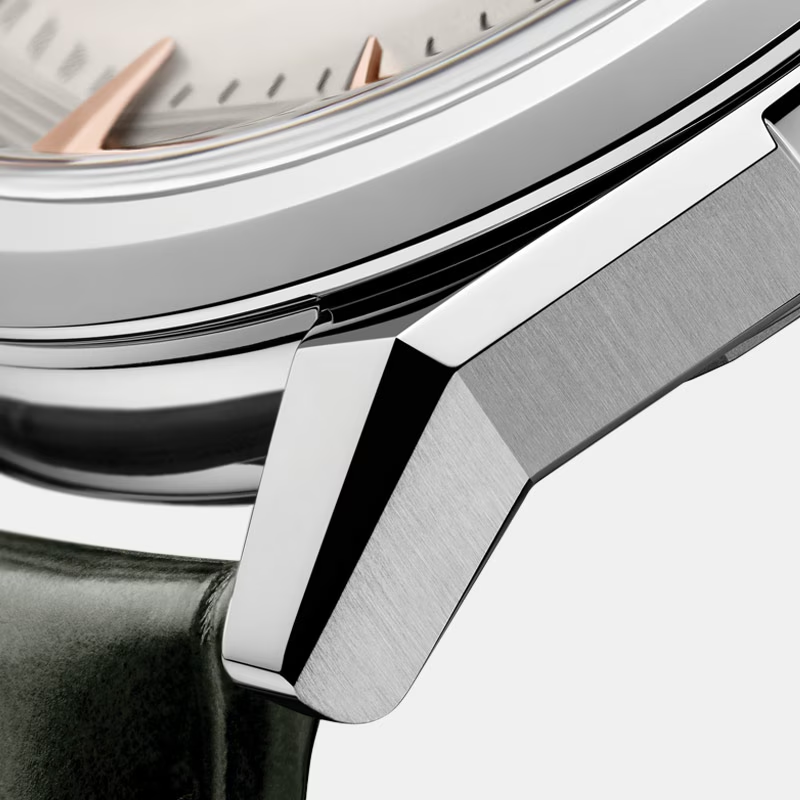
Most modern Constellation models are defined by the Manhattan-era claws and a more overtly jewelry-forward look. The new Observatory collection goes in a different direction. Omega has pulled from its earlier Constellation design language, bringing back angular pie-pan-style dials, faceted details, and dog-leg lugs that feel much closer to the brand’s 1950s and early 1960s dress-watch roots.
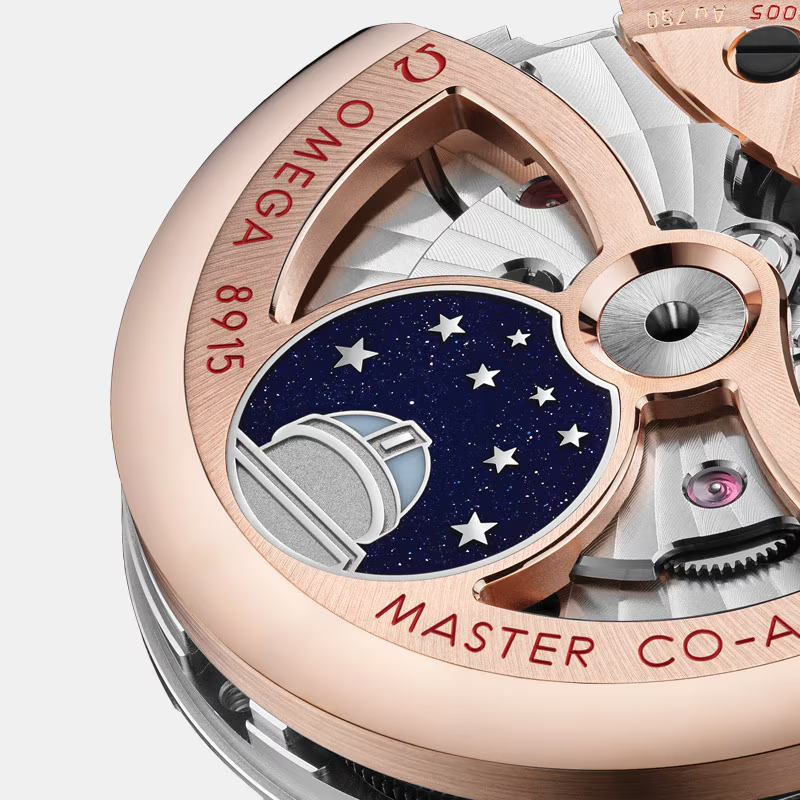
One of the strongest heritage details here is the observatory medallion on the caseback. The eight stars are not arbitrary decoration. They represent six first-place awards and two world records set by Omega in observatory chronometer trials between 1933 and 1952, which is the achievement behind the Constellation name itself. That gives the new Observatory collection a deeper sense of purpose. It is not just borrowing from vintage Omega design. It is reconnecting the watch to the precision story that defined the line in the first place.
That shift matters. The result is a Constellation that feels more serious from a watch enthusiast’s perspective. It is dressier, a little more architectural, and much more in line with the kind of Omega design that collectors tend to get excited about. If the Globemaster has carried the quiet torch for vintage-inspired Constellation design, the Observatory pushes that idea further and with much more visual confidence. Readers already exploring classic Omega design language may also want to browse our Omega Constellation collection for a broader look at this side of the brand.
How Omega Made a Two-Hand Watch Pass Master Chronometer Testing
This is the core story behind the release. Traditionally, precision certification has relied on measuring the motion of a seconds hand. A two-hand watch does not give you that same visual reference point, which is why this category has not previously gone through the full Master Chronometer process in the same way. Omega’s answer was to develop a new acoustic testing method through its Laboratoire de Précision, using continuous sound capture of each oscillation rather than relying only on visual tracking.
The system records the sound signature of the movement’s tick and tack continuously over a 25-day testing cycle, allowing Omega and METAS to assess rate stability without requiring a central seconds hand. In practical terms, it means the Constellation Observatory becomes the first watch of its kind to pair a pure two-hand display with full Master Chronometer certification. For readers who follow luxury watch news, this is the kind of Omega launch that stands out for more than just aesthetics.
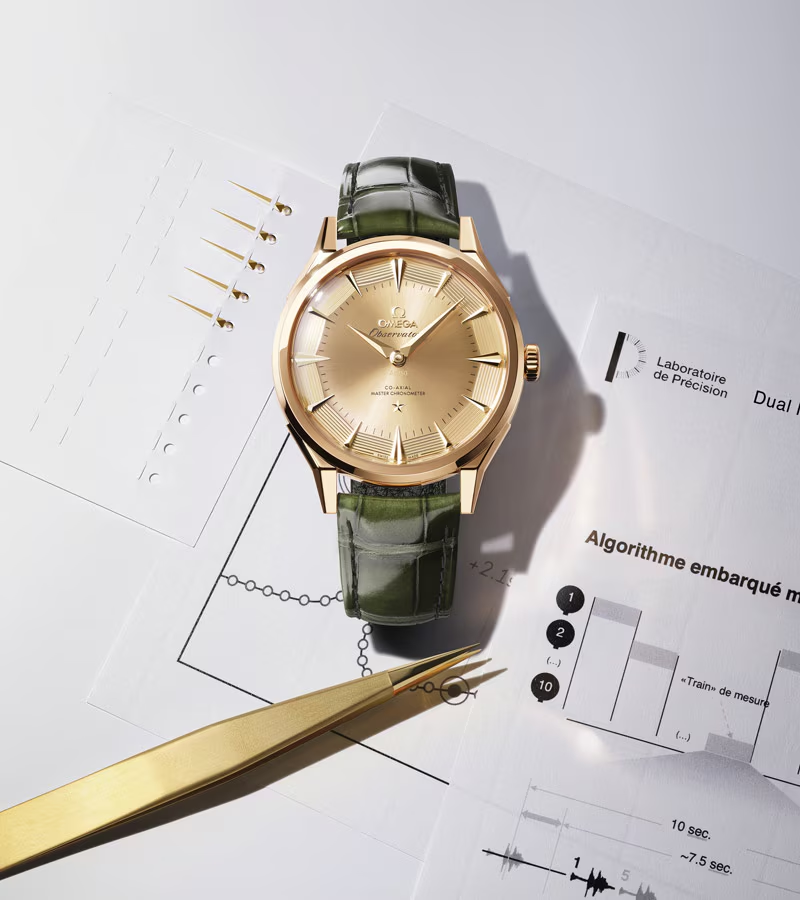
The New Calibers 8914 and 8915 Keep the Focus on Clean, Time-Only Watchmaking
The collection is powered by two new automatic movements: Caliber 8914 for the O-MEGASTEEL models and Caliber 8915 for the precious-metal references. Both are two-hand evolutions of Omega’s broader 89xx family and offer a 60-hour power reserve, automatic winding, and Master Chronometer certification.
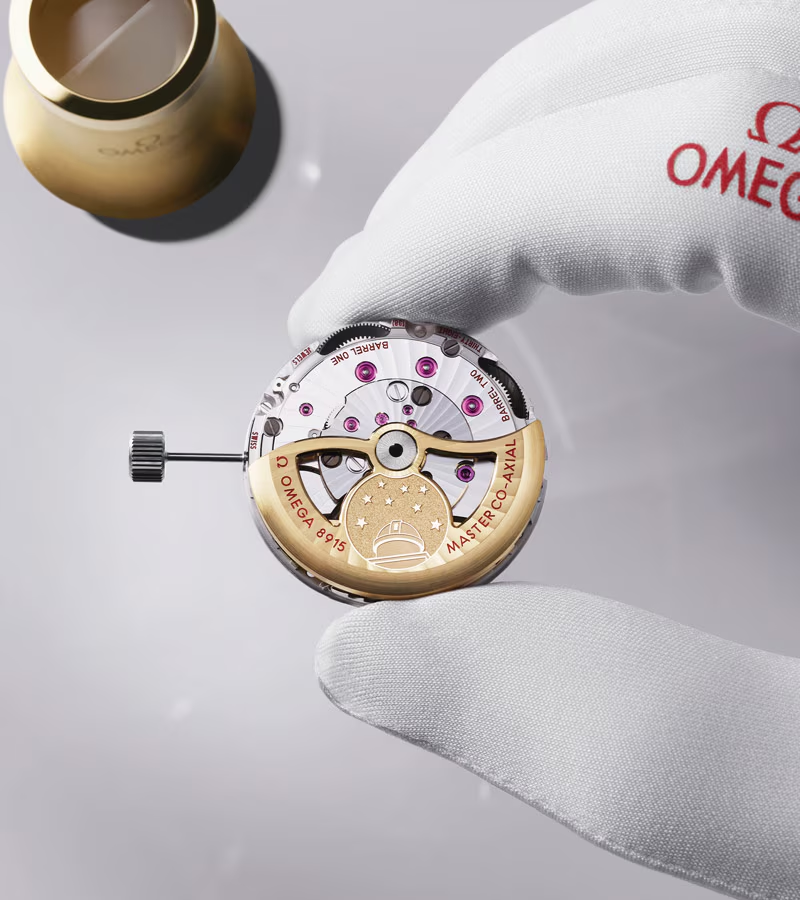
That matters because Omega did not treat this as a simple aesthetic release. The movement side of the story is just as important as the dial side. A clean two-hand watch only works if the movement underneath justifies the restraint, and here Omega gives the Observatory real mechanical substance instead of relying on vintage styling alone.
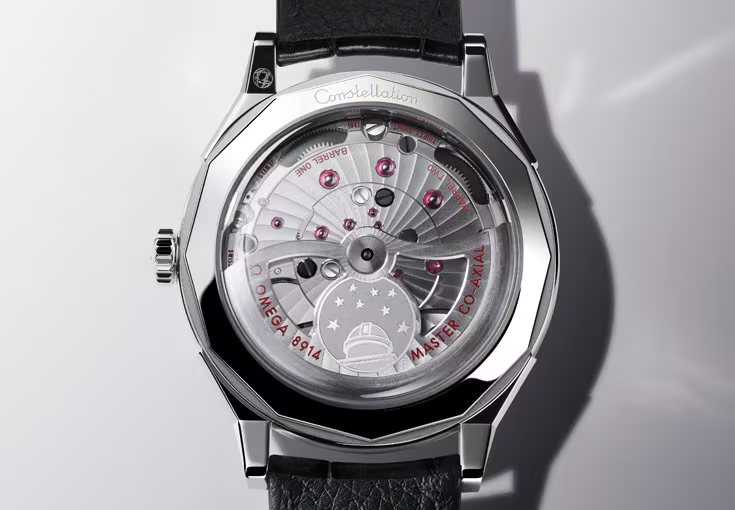
Case Size, Materials, and Dial Details Give the Omega Constellation Observatory a More Premium Feel
All nine references come in a 39.4mm case, with a thickness of 12.23mm and a lug-to-lug measurement of 47.2mm. That makes the watch modern in footprint, even if the styling is clearly heritage-driven. The lineup includes O-MEGASTEEL, 18K Sedna Gold, 18K Moonshine Gold, 18K Canopus Gold, and a Platinum-Gold edition, giving the collection a broad spread from relatively accessible steel to full precious-metal flex.
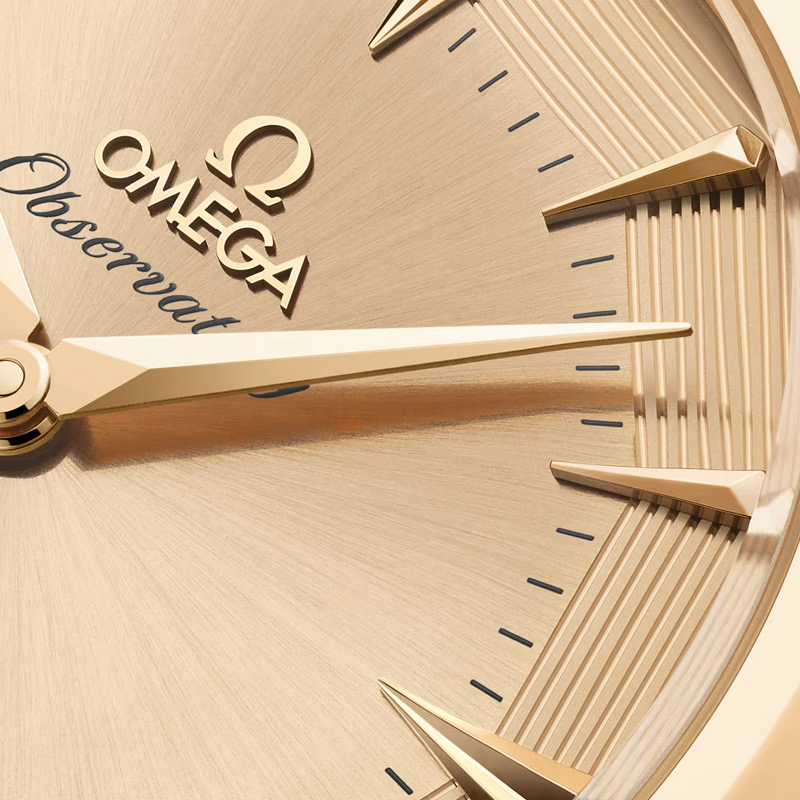
The dials are where Omega clearly wanted to make an impression. The steel models include silver, green, blue, and black options, while the precious-metal pieces use more elaborate executions, including hand-worked guilloché on certain references. The black steel model is especially notable because Omega used a glossy ceramic dial while still preserving the collection’s pie-pan geometry. That kind of detail gives the Observatory a much more distinctive identity than a standard dress watch with a smooth dial and simple baton markers. For readers who gravitate toward refined time-only pieces, this is the sort of launch that also belongs in any broader discussion of modern luxury dress watches.

The Return of the Pie-Pan Dial Gives This Omega Dress Watch Real Character
Omega has used pie-pan dials before, most notably on the Globemaster, but the new Constellation Observatory takes the idea in a sharper direction. The dodecagonal faceting is more dramatic, the hour markers are more assertive, and the overall dial furniture feels intentionally angular. It is a stronger look than the softer, safer approach many modern dress watches take.
That is a big reason this launch feels meaningful. Plenty of brands can release a technically capable dress watch. Fewer can give it real visual identity without overdesigning it. Omega managed to make the Observatory look historically grounded and recognizably modern at the same time, which is not easy.
The New Omega Constellation Observatory Could Be One of Omega’s Best Recent Dress Watch Releases
From a design standpoint, this is one of the more interesting Omega dress-watch launches in recent years. It does not chase sport-watch energy, and it does not try to split the difference. It leans into formal watchmaking, precision, and historical Constellation cues, which gives it a much clearer identity.
From a product-positioning standpoint, the pricing also tells you Omega sees this as a serious release. The O-MEGASTEEL models start at $10,900, the black ceramic-dial steel model is $12,200, and precious-metal versions begin at $37,900, with the bracelet-equipped Moonshine Gold model reaching $59,100.
That places the Constellation Observatory firmly in the premium end of Omega’s catalog. It is not meant to be a casual entry point. It is meant to show what Omega can do when it combines technical innovation, in-house metallurgy, and heritage design in one watch.
What the Omega Constellation Observatory Means for Collectors and Everyday Wear
For collectors, the main appeal is obvious: this is the first two-hand Master Chronometer, and it arrives in a design language that feels much more exciting than a generic technical demo piece. It has a real place in Omega’s broader story of chronometry, going back to the original Constellation’s connection to observatory trials and precision standards.
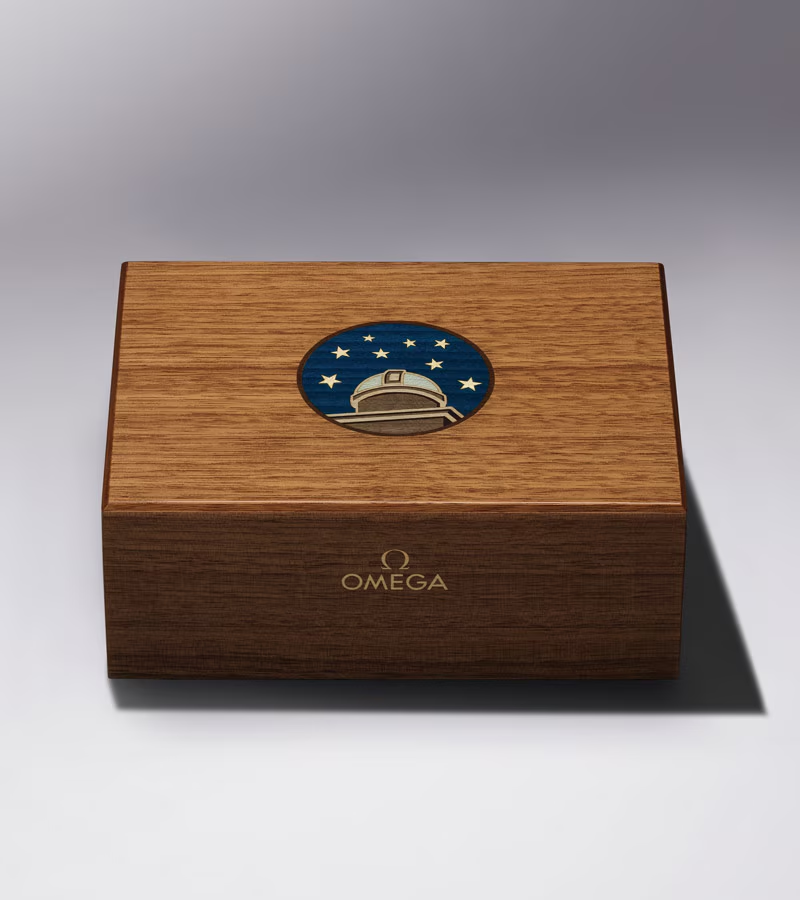
Another thoughtful detail for collectors is the presentation box, as precious-metal models in the Omega Constellation Observatory collection are delivered in a dedicated wooden box featuring the Constellation Observatory emblem in marquetry.
For everyday wear, the answer will depend on how you feel about dress-watch proportions at nearly 40mm. This is not a tiny vintage reissue. It is a modern Omega with presence, polished facets, and a more luxurious stance. Still, for someone who wants a refined everyday watch with real technical credibility, the new Constellation Observatory makes a strong case for itself.
Final Thoughts on the New Omega Constellation Observatory Collection
The new Omega Constellation Observatory is not just another heritage-flavored dress watch. It is a serious technical release wrapped in one of Omega’s best recent design efforts. The big story is the new testing method and the Master Chronometer breakthrough, but the reason people will actually care is that the watch itself looks good enough to deserve the innovation behind it.
For readers following new Omega releases closely, this is exactly the kind of launch worth paying attention to. It pushes the brand forward without losing sight of its history. For collectors in the Philadelphia area, Precision Watches—located just outside Philadelphia—offers a curated selection of new and used luxury watches, along with authorized Omega watch repair and service, which is part of what makes launches like this especially relevant to how watches are bought, worn, and maintained in real life. Readers exploring similar pieces in person can also browse our broader selection of Omega watches.

FAQs About the New Omega Constellation Observatory
What is special about the new Omega Constellation Observatory?
It is the first two-hand wristwatch collection to achieve Master Chronometer certification, made possible by a new acoustic testing method developed by Omega’s Laboratoire de Précision and certified by METAS.
What size is the Omega Constellation Observatory?
The new collection comes in a 39.4mm case and measures 12.23mm thick with a 47.2mm lug-to-lug length.
What movements are inside the Omega Constellation Observatory?
O-MEGASTEEL models use Caliber 8914, while precious-metal references use Caliber 8915. Both are automatic two-hand Master Chronometer movements with a 60-hour power reserve.
How much does the Omega Constellation Observatory cost?
Pricing starts at $10,900 for O-MEGASTEEL models, with precious-metal versions starting at $37,900 and going as high as $59,100 depending on material and bracelet configuration.
Is the Omega Constellation Observatory a dress watch?
Yes, but it is a modern one. The design is clearly dress-oriented, with heritage Constellation cues and a clean two-hand layout, though the 39.4mm case gives it more presence than many traditional dress watches.