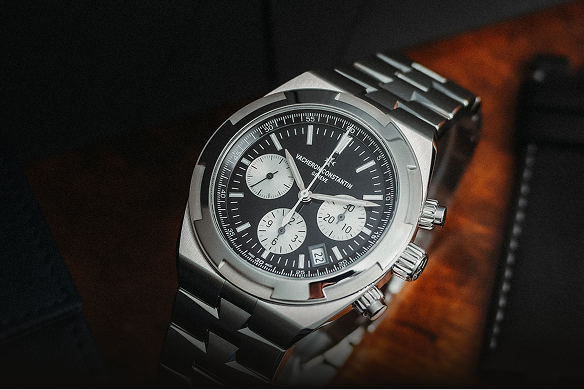
A mechanical watch is powered entirely by springs and gears, not batteries or electronics. Unlike quartz watches, mechanical timepieces rely on a wound mainspring and carefully engineered components working together to measure time.
But what exactly makes a watch mechanical, and how does a mechanical watch work? Understanding both the definition and the inner mechanics helps you decide whether this traditional form of watchmaking is right for you.

What Makes a Watch Mechanical?
A mechanical watch has a few key traits as follows:
- Power Source: It uses a mainspring (a coiled metal spring) to keep time.
- Timekeeping: It is wound by hand.
- No Electronics: It does not feature any electronics, batteries, or integrated circuits. The watch keeps time from mechanical parts working together.
How a Mechanical Watch Works
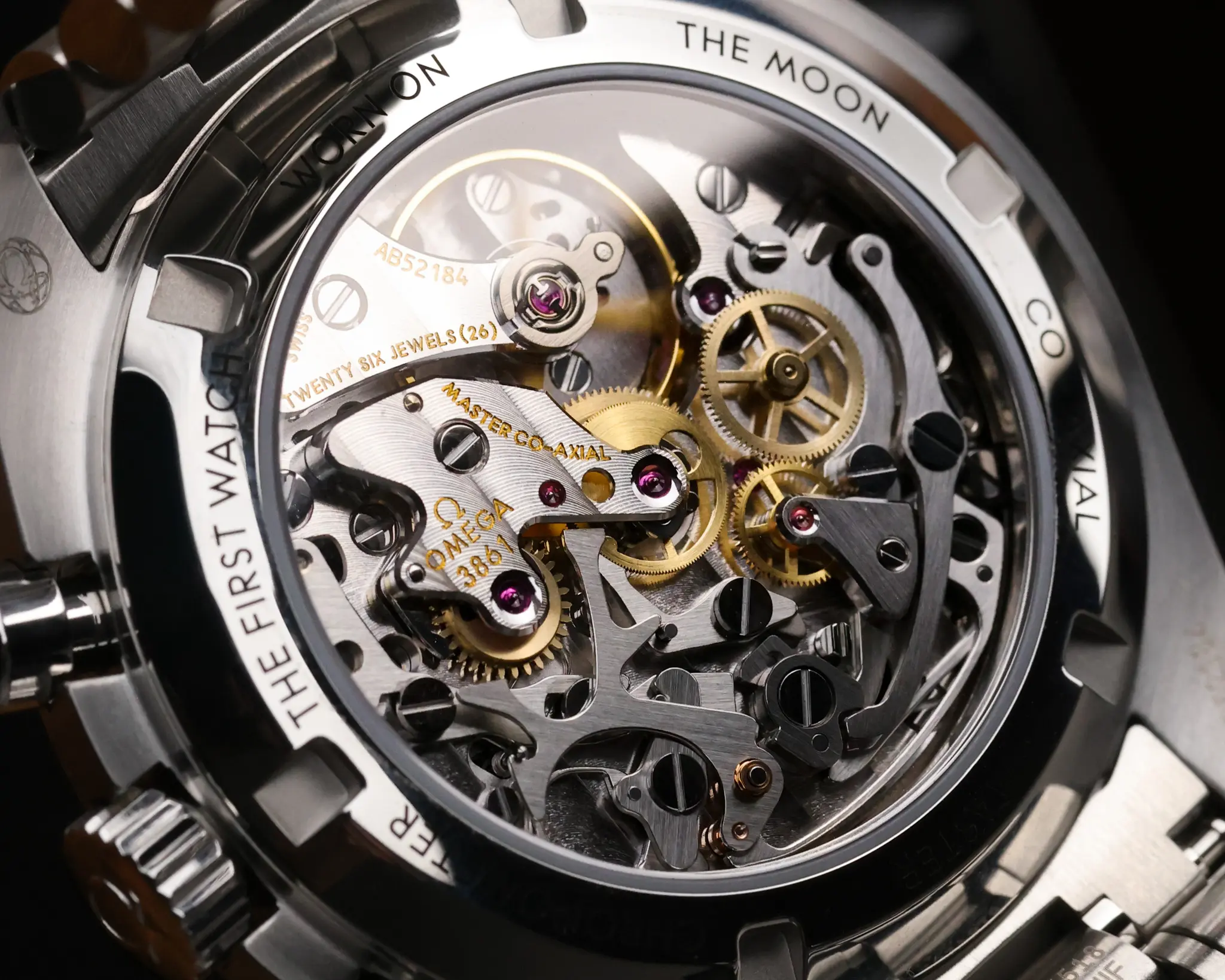
When you wind a mechanical watch, the mainspring tightens and slowly releases energy through a gear train. The escapement and balance wheel regulate that energy into steady, controlled ticks. Most mechanical watches offer a 26–72 hour power reserve, depending on the model. If you’re wondering whether it’s harmful to let a mechanical watch stop, we break that down in our guide on whether it’s bad to leave a watch unwound.
The Mainspring
At the heart of every mechanical watch is the mainspring- a tightly coiled strip of metal that stores energy when wound. As it slowly unwinds, it releases controlled power into the gear train, driving the movement of the hands.
The Gear Train
The gear train transfers energy from the mainspring to the hands. The center wheel typically completes one rotation per hour, powering the minute hand, while additional wheels regulate the seconds and hour display. Synthetic jewel bearings reduce friction and long-term wear.
The Escapement
The escapement controls how quickly the mainspring’s energy is released. Without it, the stored power would discharge instantly. The pallet fork and escape wheel work together to produce the precise ticking sound associated with mechanical watches.
The Balance Wheel & Hairspring
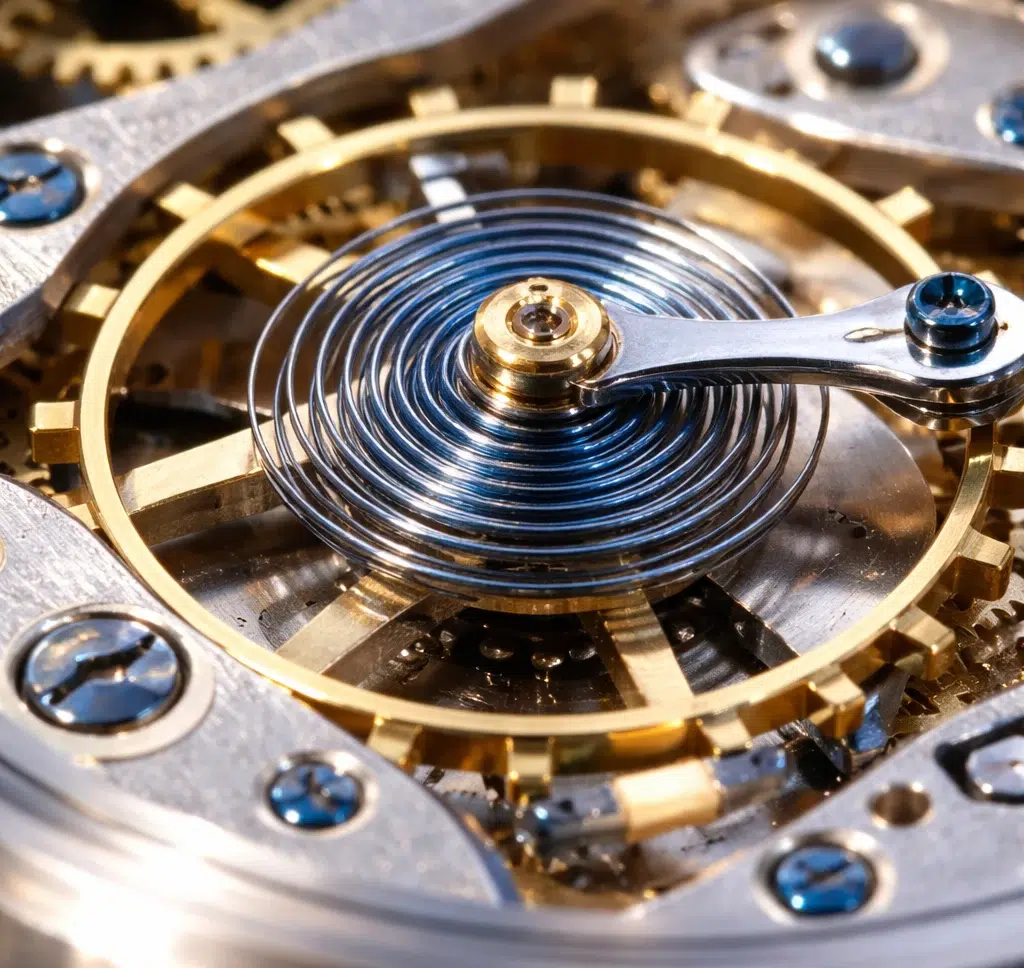
The balance wheel oscillates back and forth, regulated by a thin hairspring. This oscillation determines the watch’s accuracy, dividing time into consistent intervals.
Crown & Motion Works
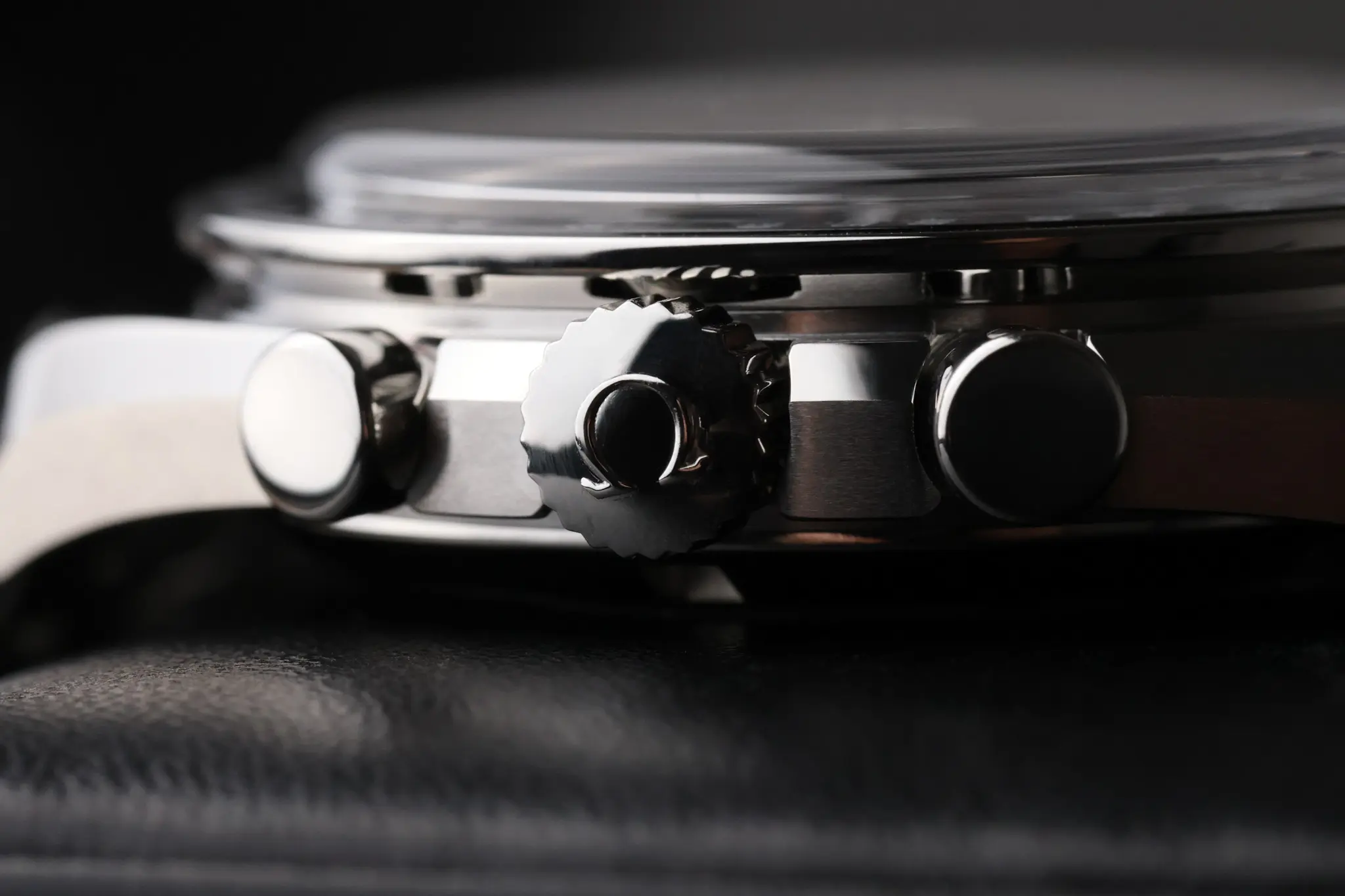
The crown allows you to wind the mainspring and set the time. Beneath the dial, motion works gears ensure the hour hand rotates at a 12:1 ratio relative to the minute hand, keeping time synchronized.
Mechanical vs. Automatic Watches
Automatic watches are a type of mechanical watch. The key difference is how they are wound.
A manual-wind mechanical watch requires you to wind the crown regularly to tighten the mainspring. An automatic watch uses a rotor that spins with wrist movement to wind the mainspring automatically.
Most automatic watches can also be manually wound from the crown if needed.
Mechanical vs Quartz Watches
The key difference between mechanical and quartz watches is how they’re powered. A mechanical watch runs on a wound mainspring and uses gears, an escapement, and a balance wheel to measure time. A quartz watch runs on a battery that sends electricity through a quartz crystal to regulate movement, which requires a periodic watch battery replacement to continue operating properly.
Quartz watches are generally more accurate and require less maintenance. Mechanical watches, while slightly less precise, are valued for their craftsmanship, heritage, and traditional engineering.
The History of Mechanical Watches
The first mechanical timekeepers were introduced in 13th-14th-century Europe, as tower clocks in town squares. The mainspring debuted in the 15th century, leading to innovations such as portable clocks and pocket watches.
The industry continued to innovate with a balance wheel in the 17th century, which improved accuracy, and the lever escapement of the 18th and 19th centuries, which controls the gears.
In the early 20th century, manufacturers realized they could place the same technology into a wristwatch. Though initially worn by women as jewelry, the convenience of wristwatches was soon recognized by soldiers and civilians alike, and they became more ubiquitous.
Popularity waned in the 1960s and 1970s due to the Quartz revolution, but the 1980s saw a revival in mechanical watches, establishing them as heritage and high-end pieces. They continue to thrive in the industry today.
Why People Choose Mechanical Watches
You might wonder why people choose mechanical watches when they could enjoy the convenience of an automatic watch. However, there are several reasons these watches remain popular. Here are some to consider:
- Craftsmanship: Many people appreciate the craftsmanship and complexity of mechanical watches and enjoy the ritual of winding them each day.
- Thinner Profile: Mechanical watches lack a rotor, so they have a thin profile, which may make them more comfortable to wear, especially under dress shirts.
- No Battery: Without a battery, you don’t have to worry about replacement and possible leaks.
- Sweeping Second Hand: A quartz watch features a second hand that moves in spurts with each tick. A mechanical watch’s second hand sweeps across the face, producing a more elegant aesthetic.
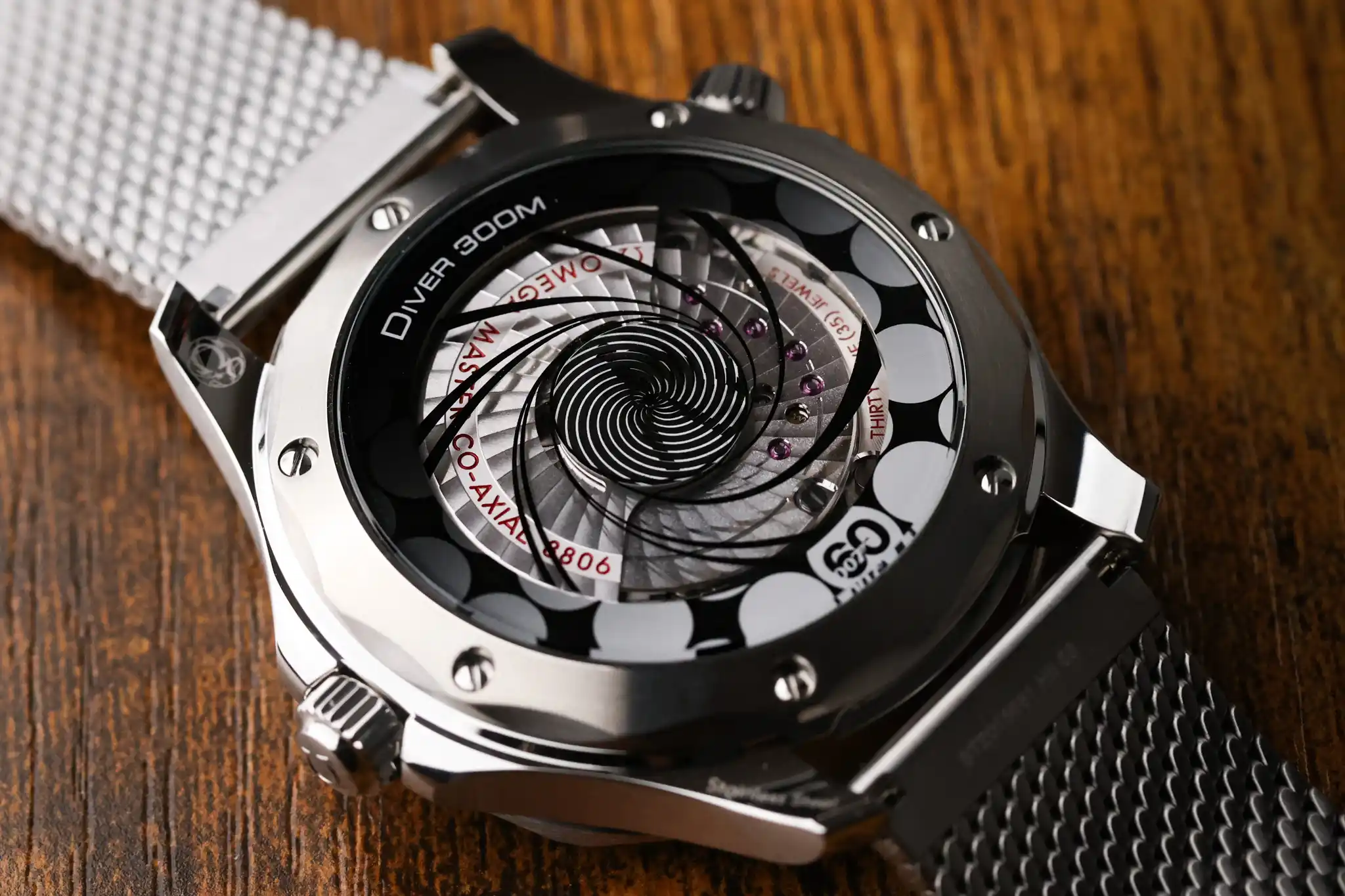
- Transparent Casebacks: Many mechanical watches feature transparent casebacks that showcase their movements.
Are Mechanical Watches Popular Today?
While some people may prefer the modern technology of automatic watches, mechanical watches remain popular, with a market value of 13.2 billion in 2024, expected to reach $19.3 billion by 2033-2034. Demand is fueled by:
- A growing interest in vintage and heritage timepieces, especially among younger generations
- The consumer perception of mechanical watches as an investment or collectible item
- An appreciation for craftsmanship and artisan engineering
- Strong brand recognition and limited-edition releases
Purchase Your Next Watch at Precision Watches
Precision Watches offers a wide selection of automatic watches, mechanical, and quartz timepieces, including new watches and pre-owned watches, available for purchase online or at our Lower Gwynedd showroom. Our extensive collection ensures you will find a luxury piece ideally suited to your taste and lifestyle. We also buy, trade, and repair watches, supporting you throughout your ownership journey.
Contact us to learn more about our products and services.

FAQs
Do Mechanical Watches Need Batteries?
No, mechanical watches do not need batteries. They are powered by a mainspring that keeps the watch ticking.
Are Mechanical Watches Accurate?
Mechanical watches are reasonably accurate. Here are some statistics to consider:
- Everyday mechanical watch: About -20 to +20 seconds per day
- Better regulated Swiss or Japanese Movements: About -10 to +10 seconds per day
- Certified chronometer (COSC and similar): -4 to +6 seconds per day
Do Mechanical Watches Need Servicing?
Yes, mechanical watches require periodic servicing, typically every 3–7 years depending on usage and brand. During a professional watch overhaul service in Philadelphia, the movement is fully disassembled, cleaned, lubricated, and regulated to restore accuracy and prevent long-term wear.
Because manual winding places regular stress on the crown assembly, components like the stem and seals may require attention over time. Our Certified Crown & Stem Repair Services address these wear points to keep your mechanical watch functioning properly.
What is the Difference Between a Quartz and a Mechanical Watch?
Unlike mechanical watches, quartz watches run on a battery. They are also more accurate than their mechanical counterparts. However, they still require battery maintenance, and many feel they don’t offer the same level of craftsmanship as mechanical watches.
Can a Mechanical Watch Last a Lifetime?
Yes, watches that are properly cared for and serviced regularly can last a lifetime and are often passed down as a family heirloom. Worn parts can be repaired or replaced.
Is It Ok to Let a Mechanical Watch Stop?
If you’ve dug up a lost watch, you may question if winding it is worth it. Mechanical watches do stop if not correctly wound. Most of the time, winding it will be sufficient to get it back up and running. While we don’t recommend letting your mechanical watch stop, it is not the worst thing you can do to your watch. Some newer models of mechanical watches even come with a power reserve indicator, giving you an idea of just how much power is on hand and when it needs rewinding.