


Complications
Every function on a watch, from the case and crystal to the dial, crown, and lugs — explained.
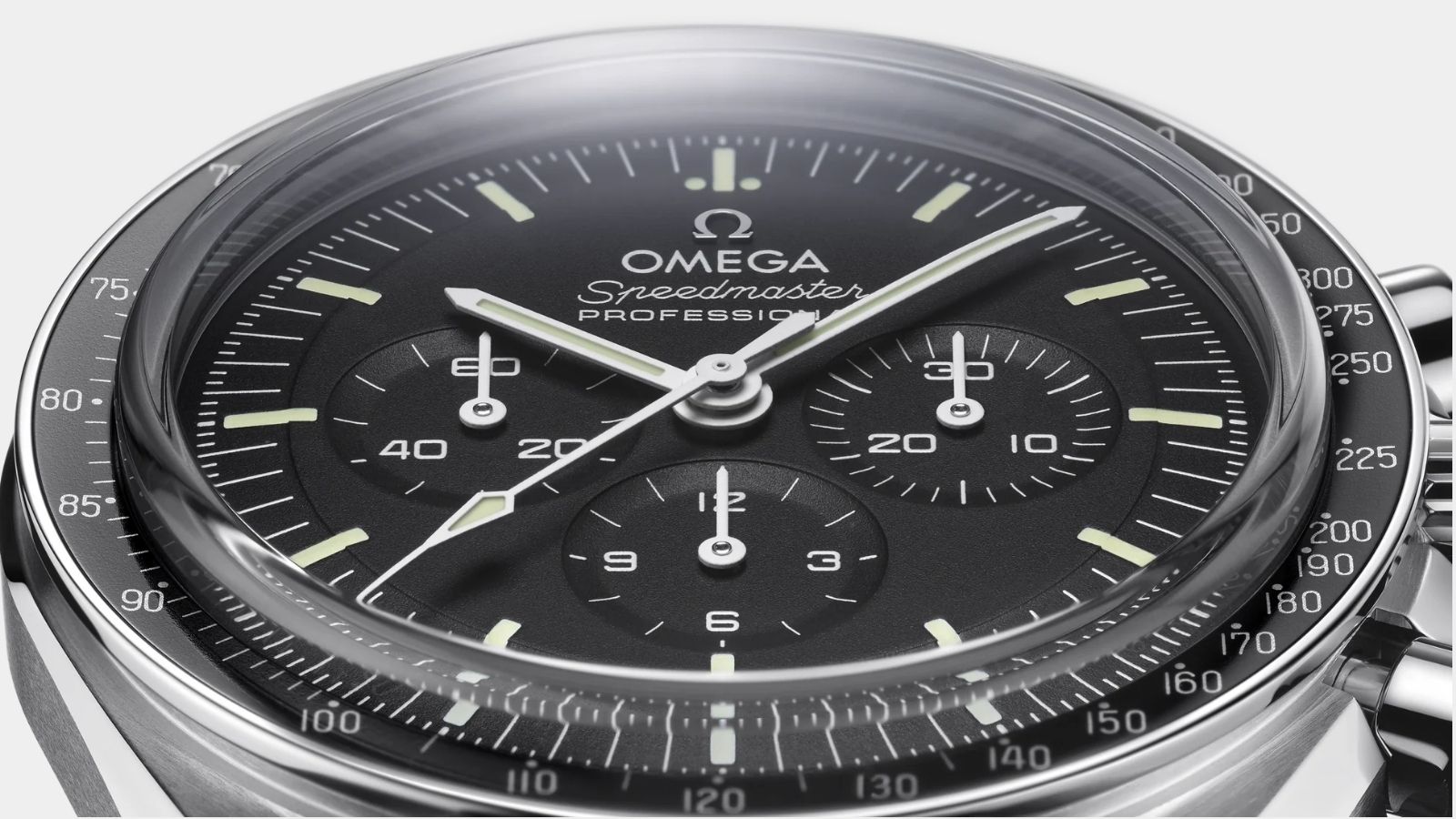
A watch complication is any function on a watch beyond the display of the time. That is the whole definition. Complications range from the simple and commonplace, like a date window, to extremely rare works of high horology that combine many functions and can take years to build. The more a watch does, the more “complicated” it is, in the literal watchmaking sense. This guide walks through the main families of complications, from the everyday to the extraordinary, so you can read any watch and know exactly what it does.
The Main Types of Watch Complications
Complications group into a few broad families. Most watches you will meet carry something from the first two.
- Date complications display the date, day, month, or full calendar.
- Chronograph complications add a stopwatch to the watch.
- Travel complications track a second time zone or more.
- Chiming, astronomical, and other complications cover everything from the moonphase to the minute repeater to the tourbillon.
Each family is covered below.

Date Complications
The simplest complication is a date display. There are four common varieties.
- Date window. Also called an aperture. On some watches the numbers alternate between red and black, a style known as a “Casino” date.
- Big date. A larger, more legible display, sometimes using two windows side by side, the left showing 0 to 3 and the right showing 0 to 9.
- Pointer date. A center hand with an arrow or crescent that points to the date around the outer edge of the dial. Sometimes called a “Banker’s” date.
- Subsidiary dial. Shows the date on a small subdial, most often alongside other complications.
Several complications build on the basic date:
- Day-Date. Adds the day of the week to the date. It is usually set with the crown, one direction for the day and the other for the date.
- Triple calendar. Also called a complete calendar. It adds the day of the week and the month of the year.
- Annual calendar. An intermediate complication that handles months of 30 and 31 days automatically, but does not account for February or leap years, so it needs one correction each year on March 1.
- Perpetual calendar. The most complex calendar. It accurately displays date, day, month, and year, and accounts for leap years, needing no correction until 2100.
- Equation of Time. The pinnacle of calendar watches. It adds the difference, in minutes, between standard “calendar time” and true “solar time.”

Travel Complications (Dual Time and GMT)
Travel complications show the time in more than one zone. They come in several forms.
- Dual movement. Not strictly a complication. The watch holds two separate movements, each with its own power source, set independently.
- Dual time. Two time displays run from a single movement.
- GMT. The watch shows two or more time zones using an extra hand and a 24-hour scale. In the independent-hour-hand version, the main hour hand is set on its own, which greatly increases flexibility for travelers. Learn more in our guide to the GMT watch.
- World time. A rotating inner 24-hour ring paired with an outer ring listing a city in each of the 24 zones, so the wearer can read the time anywhere on earth at a glance.
Moonphase and Astronomical Complications
The moonphase is one of the most loved complications, as decorative as it is useful. It shows the current phase of the moon, full, half, quarter, or new, through an aperture on the dial. Sailors originally used it to track the tides. Today it is prized mostly for its beauty, and it remains one of the most popular complications on dress and luxury watches.
Other astronomical and display complications include:
- Power reserve indicator. Shows how much energy is left in the mainspring, sometimes in days on watches with very long reserves. Found only in mechanical watches.
- Jump hour. The hour appears in a window and jumps instantly to the next number every 60 minutes, rather than sweeping.
Chiming Complications
Chiming complications sound the time rather than only showing it.
- Minute repeater. A movement that chimes out the time on demand when a lever on the case is pressed, using different tones for hours, quarters, and minutes. Common on 18th and 19th century pocket watches, it is now built as a collectible rather than a tool, and remains one of the most difficult complications to make.
- Alarm (réveil). A function, available on manual, automatic, and quartz watches, that sounds at a set time independent of the main time. On some models wrist motion winds the alarm; on others it is wound by hand.
The Tourbillon
Invented by Abraham-Louis Breguet, the tourbillon improves a watch’s accuracy by placing the escapement in a rotating cage, which cancels out the timekeeping errors gravity causes as the watch changes position. It is not strictly necessary for accuracy in a modern watch, but it is deeply admired as a feat of craftsmanship. The tourbillon is extremely rare and takes enormous time and skill to build, which is why it sits at the top of high horology.
From the Showroom
Complications are where watchmaking becomes an art, and our collection spans the range, from everyday date and chronograph models to serious high complications.
Among the brands we carry, you will find chronographs, GMT travel watches, moonphase dials, and annual and perpetual calendars across the lineup. Our team can walk you through how each complication works on the wrist and which suits the way you actually use a watch.
Visit our Philadelphia showroom to see these functions in action, or start at the full Watch Education hub to explore each complication in depth.
FAQ
What is a complication on a watch?
A complication is any function a watch performs beyond telling the time, such as a date, a chronograph stopwatch, a second time zone, a moonphase, or a tourbillon. The more functions a watch has, the more complicated it is.
What is the most common watch complication?
The date display is the most common, followed by the chronograph. Both appear on a huge range of watches at every price level.
What is the difference between a complication and a chronometer?
A complication is a function beyond timekeeping. A chronometer is a watch certified for exceptional accuracy. They are unrelated: a watch can have many complications and no chronometer rating, or the reverse.
What is the most complicated watch complication?
Among the most complex are the perpetual calendar, the minute repeater, and the tourbillon. A “grand complication” combines several of these in a single watch, and can take years to build.
What is a moonphase watch?
A moonphase watch displays the current phase of the moon through a window on the dial. It is one of the oldest and most decorative complications, originally used to track tides.
Do complications make a watch more valuable?
Often, yes. More complex and harder-to-build complications generally raise a watch’s price and prestige, though simple complications like a date add little. Rarity and craftsmanship drive the value.