


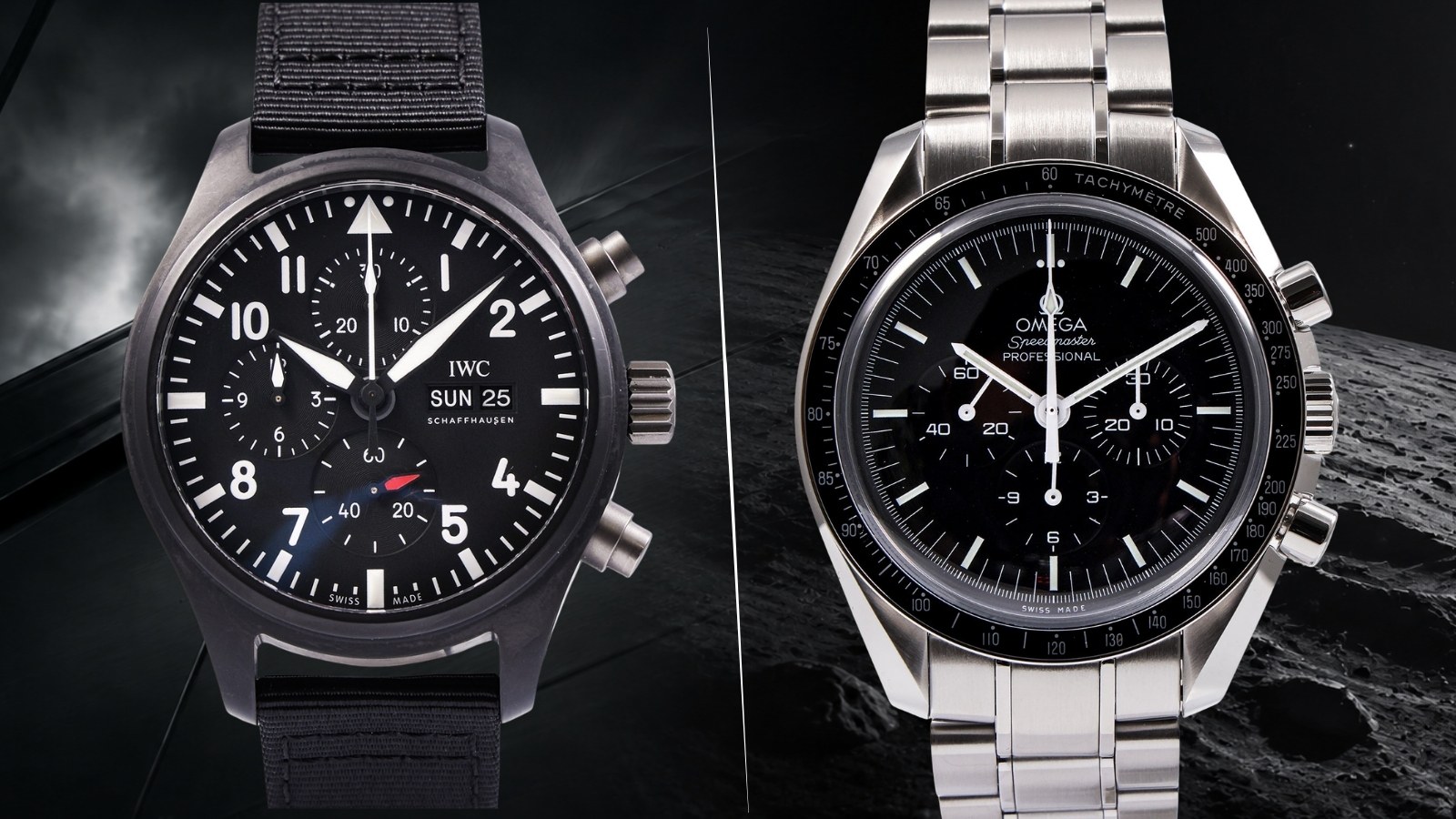
IWC vs Omega is one of the more interesting matchups in Swiss watchmaking, because the two brands rarely compete for the exact same buyer. Both build serious mechanical watches with real engineering behind them. Both have loyal followings. Yet the reasons people choose one over the other come down to positioning, movement philosophy, and what each brand’s name signals on the wrist.
This comparison breaks the two brands down by the factors that actually matter when you are deciding where to spend: price, movements, design, resale value, and which watch fits which buyer.
Price and Positioning
Much of Omega’s core lineup, including the Omega Speedmaster Moonwatch, Omega Seamaster Diver 300M and Aqua Terra, falls between approximately $6,000 and $8,000 in stainless steel, depending on the reference, strap or bracelet. Precious-metal models, complications and special editions can cost considerably more. Comparable IWC watches often begin slightly higher. Current steel Pilot’s Watch Chronograph models generally fall between approximately $7,000 and $8,500, while steel Portugieser and Big Pilot models commonly begin around $9,000 and extend well into five figures for precious-metal or complicated references.
The difference also affects how the brands are positioned. Omega offers several widely recognized models at a comparatively accessible point in the luxury-watch market, making it a common choice for someone purchasing a first high-end Swiss watch. IWC generally presents a more understated identity centered on aviation, engineering and mechanical watchmaking, which may appeal to buyers looking beyond the most immediately recognizable luxury-watch names.
Movements
Omega’s advantage here is consistency. Every current Omega mechanical watch runs an in-house co-axial movement with METAS Master Chronometer certification. The co-axial escapement reduces friction between moving parts, which supports longer service intervals, and METAS testing checks each watch for accuracy and magnetic resistance well beyond standard COSC requirements.

IWC also builds primarily in-house, but the engineering story reads differently. IWC calibers lean toward robust, over-engineered construction, long power reserves, and, in the Portugieser and pilot lines, movements designed to be legible and serviceable rather than flashy. Many IWC chronographs use the manufacture 69000-series caliber, while flagship pieces carry more complex movements with power reserves stretching to seven or eight days. Where Omega standardizes METAS certification across the range, IWC’s strength is depth in fewer, more deliberately engineered calibers.

Design and Identity
The two brands draw from different histories. Omega’s identity is built on space and the sea. The Speedmaster went to the Moon in 1969, and the Omega Seamaster has been a defining dive watch since 1948, later reinforced by its James Bond association. As a result, Omega designs tend toward classic, sport-driven forms with wide public recognition.

IWC’s identity centers on aviation and precision engineering. The Pilot’s Watch line traces back to cockpit instruments from the 1930s, and the Portugieser was originally built for Portuguese merchants who wanted marine-chronometer accuracy on the wrist. IWC designs read more restrained and less overtly sporty than Omega’s, which is part of why the brand appeals to buyers who want recognition among collectors rather than at first glance.

The Flagship Matchup | Portugieser vs Speedmaster
The clearest head-to-head is the IWC Portugieser against the Omega Speedmaster, since both represent each brand’s most recognizable expression of in-house engineering. The Portugieser Chronograph pairs a clean, large-dialed design with IWC’s manufacture chronograph caliber, aimed at a buyer who wants understated elegance with genuine complexity underneath. The Speedmaster leans the other way, built around motorsport and space heritage, with the hand-wound Moonwatch caliber as its most famous expression.
Price and presence differ too. A pre-owned Portugieser Chronograph typically sits above a comparable Speedmaster, and it wears larger and dressier on the wrist. If you are deciding within Omega’s own range first, our comparison of the Seamaster vs Speedmaster breaks down which Omega line fits a given buyer before you even get to IWC.

OMEGA Speedmaster Professional vs. IWC Pilot’s Chronograph
There is a second matchup worth its own look, since both watches compete more directly on size, price, and everyday wearability than the Portugieser does. The Speedmaster Professional Moonwatch runs a 42mm case with the hand-wound Calibre 3861, a tachymeter bezel, and a three-register chronograph layout built for legibility over anything else. The IWC Pilot’s Watch Chronograph typically runs 41mm to 43mm, built around IWC’s automatic in-house chronograph caliber, with a cleaner two-register dial and a slightly dressier flight-instrument look.
Wearing experience is where the two diverge most. The Speedmaster Professional is hand-wound, so it needs regular winding and delivers a lower power reserve, but it carries genuine space heritage that the IWC cannot match. The Pilot’s Watch Chronograph winds automatically, runs a longer power reserve, and reads as more office-appropriate day to day. On price, the two sit closer together than the Portugieser matchup, with a pre-owned Speedmaster Professional often landing at or slightly below a comparable Pilot’s Watch Chronograph.

Value Retention
Omega holds value more predictably across its lineup. In-house movements, METAS certification, and strong recognition at the luxury tier all support steady demand on the secondary market. For a closer look at what drives those numbers, our guide to Omega resale value covers which references perform best.
IWC’s resale picture is more reference-dependent. Some models, particularly the Pilot’s Watch, Big Pilot, and limited editions, hold value well. Others, especially dressier or discontinued pieces, can see a steeper drop from retail. Our guide to IWC resale value breaks down which references tend to hold up and which ones depreciate faster.
For a buyer, that difference matters. Omega is generally the safer store of value across the board. IWC can match or beat that at the reference level, but only if you know which references to target.
Which Should You Choose?
Choose Omega if you want consistent movement technology, METAS certification across the range, and stronger resale value with less research required. It is also the more familiar name if brand recognition matters to you.
Choose IWC if you want a more understated, engineering-first identity, are drawn to aviation heritage over motorsport and space themes, and do not mind researching which specific reference holds value best.
At Precision Watches, we can help either way. As an Authorized Omega Dealer, we carry the current lineup and can walk you through the collection in person. We also buy, sell, and trade pre-owned IWC watches, so you can compare both brands without pressure. If you already own one and want to sell iwc watch for cash toward something new, our team can give you a straightforward quote. Visit our family-owned watch store in Lower Gwynedd, or browse our new Omega watches and pre-owned IWC watches online. For more comparisons like this one, our watch journal covers other brand matchups and buying guides.

IWC vs Omega FAQs
Is Omega better than IWC?
Neither is simply better. Omega offers more consistent movement certification and stronger resale value across its lineup. IWC offers a more understated, engineering-first identity with strong performance concentrated in specific references. The right choice depends on budget, design taste, and how much research you want to do.
Which brand holds value better?
Omega holds value more predictably across its full lineup, thanks to in-house co-axial movements and consistent METAS certification. IWC’s resale value varies more by reference, with the Pilot’s Watch and Big Pilot lines generally performing best.
Is IWC more expensive than Omega?
Generally, yes. Omega’s core lineup runs from roughly $5,000 to $8,000 new, while IWC’s current production typically starts closer to $6,500 and runs higher for the Portugieser and Big Pilot lines.
Is the Portugieser or the Speedmaster the better watch?
Both are excellent. The Portugieser offers a dressier, more understated design with genuine in-house complexity. The Speedmaster brings motorsport and space heritage with a lower price and stronger name recognition. The right pick depends on whether you want a dress watch or a chronograph icon.
Speedmaster Professional or IWC Pilot’s Watch Chronograph, which is better?
Both are strong choices at a closer price point than the Portugieser matchup. The Speedmaster Professional is hand-wound with genuine space heritage, while the Pilot’s Watch Chronograph winds automatically and offers a longer power reserve with a dressier, more office-appropriate look.
Which is a better first luxury watch?
Omega is the more common entry point, thanks to a lower price ceiling and consistent movement technology across the range. IWC suits a buyer who already knows the category and wants a name with more depth for collectors specifically.


