


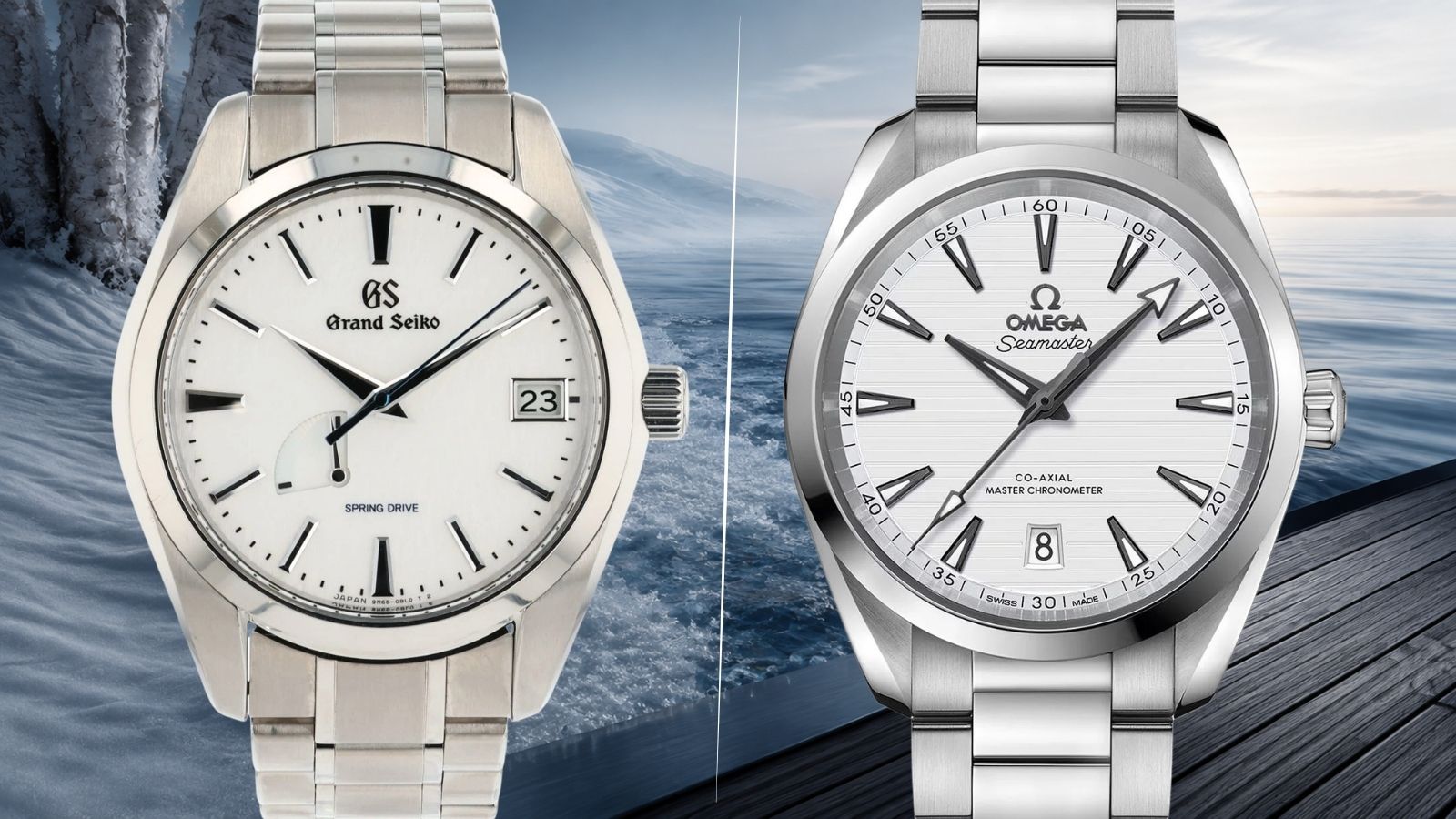
Grand Seiko vs Omega is a genuinely close call for a lot of buyers, because these two brands rarely lose to each other on quality. Both build serious, well-engineered watches in a similar price range, and both have devoted followings. Where they diverge is in what they choose to emphasize: Grand Seiko leans into craftsmanship that rewards close attention, while Omega leans into verified performance and instant recognition.
This comparison breaks the two brands down by what actually matters when deciding where to spend: movement accuracy, case finishing, water resistance, design, resale value, and which watch suits which buyer.
Movement Accuracy
Grand Seiko builds three distinct movement types, and the choice between them changes the ownership experience. The Hi-Beat mechanical calibers run at a high frequency for a smoother seconds-hand sweep and tighter daily accuracy than most standard Swiss mechanical movements. The Spring Drive caliber takes a different approach entirely. A mainspring powers the watch, but an electronic glide wheel regulates the timing, landing accuracy close to a quartz watch while keeping the feel of a mechanical piece. Grand Seiko also builds a hand-finished quartz caliber, the most accurate of the three, though the least prized by collectors.

Omega runs the Co-Axial Master Chronometer across its current lineup. METAS, an independent Swiss testing body, certifies every Master Chronometer movement for daily accuracy and verifies resistance to strong magnetic fields well beyond standard chronometer testing. No current Grand Seiko mechanical or Spring Drive reference carries an equivalent independently verified antimagnetic rating. For a buyer who works around strong magnetic fields, that gap is a real, practical difference, not just a spec sheet number.

Case Finishing
Case finishing is where Grand Seiko draws a clear line. The brand’s Zaratsu polishing technique presses each case surface by hand against a rotating disc, producing flat, mirror-like surfaces with sharp, distortion-free edges where brushed and polished sections meet. A single case can take many hours of skilled hand work to complete, and the difference shows immediately under direct light.
Omega’s case work is genuinely well made, with clean, consistent brushed and polished surfaces. Omega relies more on machine-assisted finishing, while Grand Seiko leans further into hand polishing, and each approach comes with its own tradeoff. Grand Seiko’s flat mirror surfaces show scratches more readily, and proper refinishing typically requires factory-level service, while Omega’s finish is more forgiving in daily wear and easier to maintain over time.

Water Resistance
Omega rates its current Seamaster Aqua Terra references to 150 meters across the board, and the Seamaster Diver 300M goes to 300 meters. The Seamaster Planet Ocean goes further still, rated to 600 meters on standard references. If you want a closer look at a true dive-focused reference, our review of the Omega Seamaster Diver 300M Bronze Gold covers one in depth. Grand Seiko varies more by collection. Most Heritage and Elegance references sit around 100 meters, with some dress models rated for splash resistance only, while select Sport collection pieces reach higher ratings. For a buyer who wears a watch near water regularly, Omega covers more of its lineup at a higher rating without exception.

Design and Identity
Grand Seiko’s design language draws from Japanese landscapes and seasons. Textured dials shift character under different light throughout the day, and the brand’s proprietary finishing techniques are difficult for other manufacturers to reproduce at a similar price point. It is a look built to reward close, repeated attention rather than to announce itself from across a room.
Omega’s design language draws from space exploration, diving, and decades of Olympic and cultural association. The horizontal teak-pattern dial on the Aqua Terra and the tool-watch presence of the Speedmaster and Seamaster Diver read clearly and confidently, with a wider range of color and dial variety across the current lineup than Grand Seiko offers at a comparable level. Omega’s palette is broader. Grand Seiko’s dials are harder to find anywhere else.
The Flagship Matchup: Aqua Terra vs Grand Seiko Heritage
The clearest head-to-head sits between the Omega Seamaster Aqua Terra and Grand Seiko’s Heritage collection, since both are positioned as the everyday, do-everything steel watch in each brand’s lineup. Both run three-hand automatic movements in a similar case size and price range, and both come on a comfortable steel bracelet, making this the matchup most buyers actually weigh in person.
The Aqua Terra brings Master Chronometer certification, a broader color range, and a bracelet with modern micro-adjustment on newer references. A Grand Seiko Heritage piece, particularly one with a Spring Drive movement, brings finishing depth and a dial that changes character depending on the light. If you want to see this matchup up close, we have hands-on reviews of both sides: our review of the Omega Seamaster Aqua Terra 150M and our review of the Grand Seiko Spring Drive GMT walk through each watch on the wrist in detail.

Value Retention
Omega holds value more predictably on the secondary market. Broad name recognition creates a wider buyer pool, and Master Chronometer certification supports steady demand across most current references. Our guide to Omega resale value covers which references perform best.
Grand Seiko’s resale picture depends more on the specific reference and movement. Spring Drive and select Hi-Beat mechanical pieces, along with dial-forward references like the Snowflake, tend to hold up best, while standard quartz models see a steeper drop from retail. Our guide to Grand Seiko resale value breaks down which references are the safer bets.
For a buyer, that difference is worth weighing honestly. Omega is generally the more liquid, predictable resale story. Grand Seiko can match or beat that at the reference level, but the buyer pool is thinner, and selling one later takes more patience.

Which Should You Choose?
Choose Grand Seiko if case finishing and dial artistry matter more to you than any other spec, you plan to hold onto the watch long-term rather than resell quickly, and you like the idea of wearing something most people around you will not immediately recognize or price.
Choose Omega if you want independently verified accuracy and magnetic resistance, plan to wear the watch near water regularly, and want a name that communicates its value clearly to people outside the watch world, along with a faster, more liquid resale market when the time comes.
At Precision Watches, we can help either way. As an Authorized Omega Dealer, we carry the current lineup and can walk you through the collection, including the Seamaster Aqua Terra, in person. We also buy, sell, and trade pre-owned Grand Seiko watches, so you can compare both brands without pressure. If you already own an Omega and want to put its value toward something new, our team can help you sell your omega watch for a straightforward quote. For more on either brand’s full lineup, our Grand Seiko buying guide covers the brand’s history, movements, and models in depth. Visit our family-owned watch store in Lower Gwynedd, or browse our new Omega watches online.

Grand Seiko vs Omega FAQs
Is Grand Seiko better than Omega?
Neither is simply better. Grand Seiko offers deeper hand finishing and dial artistry concentrated in specific references. Omega offers independently verified accuracy, broader water resistance, and stronger resale liquidity across its lineup. The right choice depends on whether you value craft or verified performance and recognition more.
Which brand holds value better?
Omega holds value more predictably across its full lineup, thanks to broad name recognition and Master Chronometer certification. Grand Seiko’s resale value varies more by reference, with Spring Drive and select Hi-Beat mechanical pieces generally performing best.
Is Grand Seiko more accurate than Omega?
It depends on the movement. Grand Seiko’s Spring Drive caliber rivals quartz-level accuracy, but Omega’s Co-Axial Master Chronometer movements are independently certified by METAS for both accuracy and magnetic resistance, a verification standard Grand Seiko’s mechanical and Spring Drive calibers do not currently carry.
Is the Aqua Terra or Grand Seiko Heritage the better watch?
Both are excellent everyday watches at a similar price point. The Aqua Terra offers Master Chronometer certification and a wider color range. A Grand Seiko Heritage piece offers deeper case finishing and a dial that changes character in different light. The right pick depends on whether you prioritize verified performance or hand craftsmanship.
Which is a better first luxury watch?
Omega is the more common entry point, thanks to name recognition and a resale market that is easier to navigate. Grand Seiko suits a buyer who has owned a Swiss watch before and wants something that rewards closer attention rather than announces itself immediately.


