


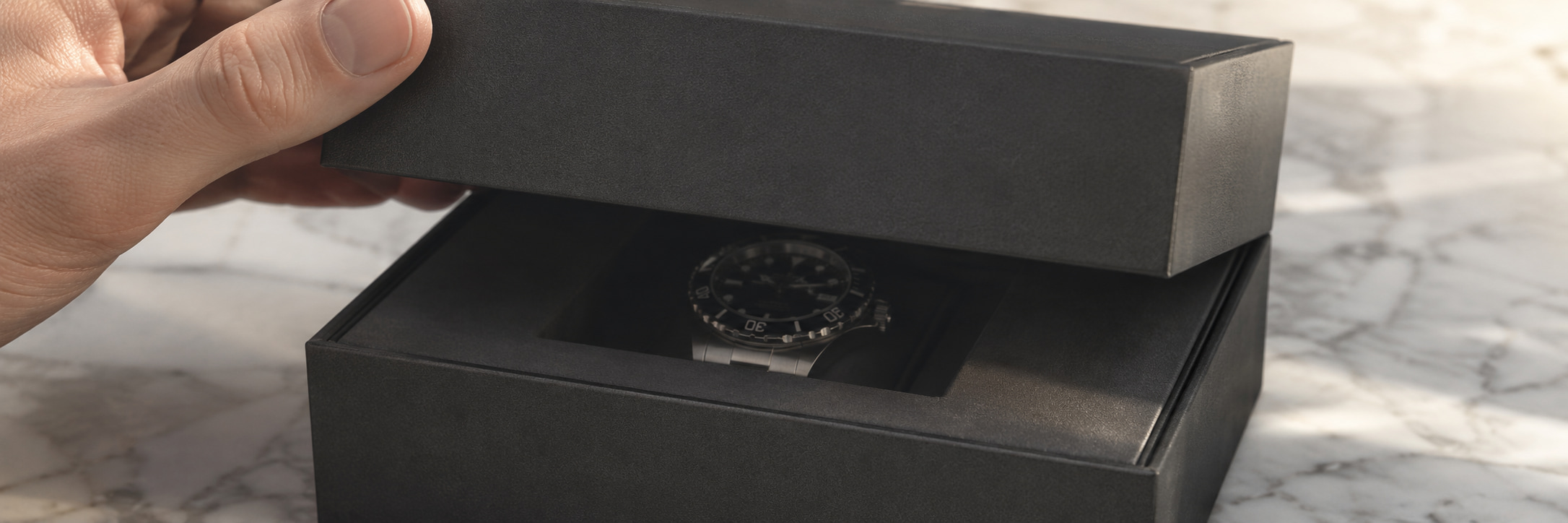
Setting Your First Luxury Watch Budget
Setting a budget for a first luxury watch comes down to what kind of luxury matters to you. For some buyers, it is brand recognition. For others, it is mechanical complications or precious metals. Meanwhile, many first-time buyers simply want a Swiss watch that holds up for decades.
Rather than naming one “correct” number, this guide breaks down the four major price tiers, what each one gets you, and how to align the budget with your lifestyle. For more specific watch recommendations within these budgets, our best graduation watches 2026 guide covers picks across price points for both gift buyers and self-buyers.

The Four Budget Tiers Explained
Here is how the major luxury watch price tiers break down, with specific brand and model examples for each.
Tier 1: $500 to $1,500
This is the entry point to genuine Swiss mechanical watchmaking. Brands like Hamilton watches and entry-level Longines watches deliver real automatic movements, sapphire crystals, and recognizable heritage.
What to expect: Automatic movements, decent finishing, Swiss manufacturing, and brand credibility. As a result, these watches feel meaningful without overwhelming the buyer’s budget.
Strong picks include: Hamilton Khaki Field Mechanical, Hamilton Khaki Field Murph, entry-level Longines Conquest references.
Tier 2: $1,500 to $3,000
At this tier, finishing improves significantly and movement options expand. Mid-tier Longines, Tudor watches, and some smaller Omega references fall in this range
What to expect: Chronometer-grade movements, better bracelet quality, and dial finishing that holds up under close inspection. Meanwhile, the watches in this tier still wear comfortably as daily pieces rather than special-occasion only.
Strong picks include: Longines Master Collection, Longines HydroConquest, Tudor 1926, entry Omega Constellation models.
Tier 3: $3,000 to $5,000
This is where many first-time buyers land. Tudor mid-line references and the broader Omega watches and Cartier watches lineups become accessible at this tier. Meanwhile, Bell & Ross watches like the BR03 collection also sit in this range, starting around $3,500.
What to expect: In-house movements, refined finishing, and watches with genuine collector appeal. As a result, these pieces tend to hold value better than entry-tier alternatives.
Strong picks include: Tudor Black Bay 36, Tudor Clair de Rose, Cartier Tank Must, Longines PrimaLuna Moonphase, Omega Seamaster Aqua Terra.
Tier 4: $5,000 and Above
Above $5,000, you enter genuine collector territory. Tudor’s top-tier references, Omega Speedmasters, and the upper Bell & Ross BR05 collection sit comfortably in this range.
What to expect: Heritage-tier movements, premium finishing, and watches that hold value over decades. Meanwhile, this tier often includes pieces with historical significance or limited production runs.
Strong picks include: Tudor Black Bay 58 ($4,975-$5,650), Omega Speedmaster Professional, Bell & Ross BR03 series, full Cartier Tank Must steel bracelet configurations.

Buy Once, Buy Right
For first-time luxury watch buyers, the temptation is to stay conservative with the budget. However, underbudgeting often leads to outgrowing the watch within a year. The buyer ends up upgrading sooner than expected and spending more overall. As a result, the smarter play is usually to stretch slightly toward the upper end of a comfortable budget.
Here are five principles for choosing a first luxury watch wisely:
1. Start with solid mechanics. Automatic mechanical movement should be the foundation. It delivers long-term reliability and watchmaking character that quartz simply cannot offer.
2. Go beyond bare bones. Look for a balance between minimum specs and meaningful features. Sapphire crystal, real water resistance, a well-made bracelet, and an exhibition caseback all add lasting value.
3. Choose useful complications, not flashy ones. A date window, GMT function, or chronograph makes sense if you will actually use it. Meanwhile, complex multi-complication pieces often deliver more visual noise than practical utility for a first watch.
4. Pick a brand with room to grow. Starting with a lower or mid-level piece from a brand you genuinely like opens the door to “buying up” within that brand later. Many serious collections start with a single Tudor or Omega and expand from there.
5. Don’t pay for what you don’t need. First-time buyers should be aware of features that offer diminishing returns. Incremental finishing improvements, brand prestige premiums, and rarity-driven pricing all command higher costs but may not match the actual buyer’s priorities.

How to Budget for a Watch as a Gift
For buyers shopping for someone else — especially as a graduation, milestone birthday, or wedding gift — the budget approach is slightly different. The watch needs to feel meaningful to the recipient, hold up over time, and respect the gift-giver’s comfort level.
Typical graduation gift budgets break down roughly like this:
- High school graduation: $500 to $1,500 (Tier 1 picks)
- College graduation: $1,500 to $3,500 (Tier 2 or lower Tier 3)
- Professional school graduation (med, law, MBA): $3,000 to $8,000 (Tier 3 or Tier 4)
For specific watch picks within each tier, our best graduation watches 2026 guide covers recommendations for him and her across price points.

New vs. Pre-Owned: A Smart Way to Stretch the Budget
One of the best ways to enter the luxury watch market at a higher tier is to consider pre-owned. A pre-owned Tudor Black Bay or Omega Seamaster from a reputable dealer can deliver a meaningfully better watch within the same budget compared to a new entry-level piece.
Pre-owned does carry concerns for first-time buyers. Is the watch authentic? Has it been properly maintained? What about warranty coverage? Therefore, the answer is to buy from an authorized dealer or established showroom rather than an unverified individual seller.
A certified pre-owned watch from a reputable source typically includes:
- Verified authenticity
- A full inspection of condition and function
- A dealer-backed warranty
- Documentation including service records and original packaging when available
For buyers looking to enter at a higher tier through pre-owned, Precision Watches offers a curated selection of pre-owned luxury watches with full authentication and warranty coverage.

What Drives the Price of a Luxury Watch
Two watches can look similar but differ in price by thousands of dollars. As a result, understanding what drives the price tag helps first-time buyers spend confidently rather than guessing.
Movement quality: Better movements require more design and assembly work. Meanwhile, they deliver higher accuracy and longer service life.
Finishing: Polished, beveled, and brushed finishes require skilled labor. As a result, high-level finishing significantly affects price.
In-house vs. ETA calibers: In-house movements are designed and built by the brand. ETA movements are widely used, easier to service, and less expensive. In-house calibers typically command higher prices.
Sapphire crystal: Sapphire is more scratch-resistant than acrylic or mineral glass. However, it costs more to produce and shape.
Water resistance: Real water resistance requires proper engineering and gasket construction, which adds cost.
Bracelet weight and construction: A solid, well-finished bracelet indicates higher-quality materials and more careful assembly.
Final Thoughts: Lifestyle Over Price
The right first luxury watch is the one that fits your lifestyle, your personal style, and your wrist. Price is only one part of that equation. Does the watch feel right on the wrist? Does it match how you actually live? Does it offer features you will genuinely use?
If a watch ticks those boxes and sits within a budget you can comfortably afford, the price tier is secondary. A $1,500 Hamilton Murph worn every day delivers more value than a $5,000 watch left in the box.
For more specific picks in this price range, our guides to the best luxury watches under $5,000, best women’s watches under $5,000, and best dive watches under $5,000 cover focused recommendations for different buyer profiles.

See Your First Luxury Watch in Person at Precision Watches
For buyers looking for a Philadelphia luxury watch retailer, Precision Watches is just outside the city in Lower Gwynedd, PA. The store is a family-owned authorized retailer carrying Cartier, Tudor, Omega, Longines, Hamilton, and Bell & Ross. Meanwhile, we offer a curated selection of pre-owned luxury watches and in-house luxury watch repair by our certified watchmakers.

Frequently Asked Questions About First Luxury Watch Budgets
How much should you spend on a first luxury watch?
A first luxury watch budget can sit anywhere between $500 and $5,000 depending on the buyer’s goals and the occasion. Entry-level Swiss mechanical pieces start around $500. Meanwhile, collector-tier first watches reach $5,000 and above. The right amount is generally the highest comfortable budget that delivers genuine movement quality and brand heritage.
What is the best brand for a first luxury watch?
Strong first luxury watch brands include Hamilton, Longines, Tudor, and Omega. Each offers Swiss mechanical quality, recognizable brand heritage, and entry points across multiple price tiers. As a result, buyers can start with a smaller piece and upgrade within the brand later.
How do I know if I can afford a luxury watch?
A luxury watch is affordable if you can pay for it without touching emergency savings or going into debt. For most buyers, a comfortable cap equals around one month of personal expenses. Setting the budget honestly upfront avoids the trap of overspending on a first piece.
Should I buy new or pre-owned for a first luxury watch?
Both work, but pre-owned often stretches the budget significantly. A pre-owned watch from an authorized dealer or established showroom delivers genuine value while typically including authentication and warranty coverage. Meanwhile, new watches come with manufacturer warranties and the full retail experience.
Does the metal matter for a first luxury watch?
Yes, but probably less than you think. Stainless steel is the most versatile choice and matches most casual and professional looks. Gold reads more formal and traditional. Meanwhile, rose gold and two-tone configurations sit in the middle. The right metal depends on personal style and how the watch will be worn day to day.
Should I buy a luxury watch in-store or online?
Always try the watch on in person if possible. Case dimensions, dial finishing, and bracelet feel all read differently on the wrist than in product photos. Online options offer more inventory selection, but for a first luxury watch, the in-person experience matters significantly more.


