


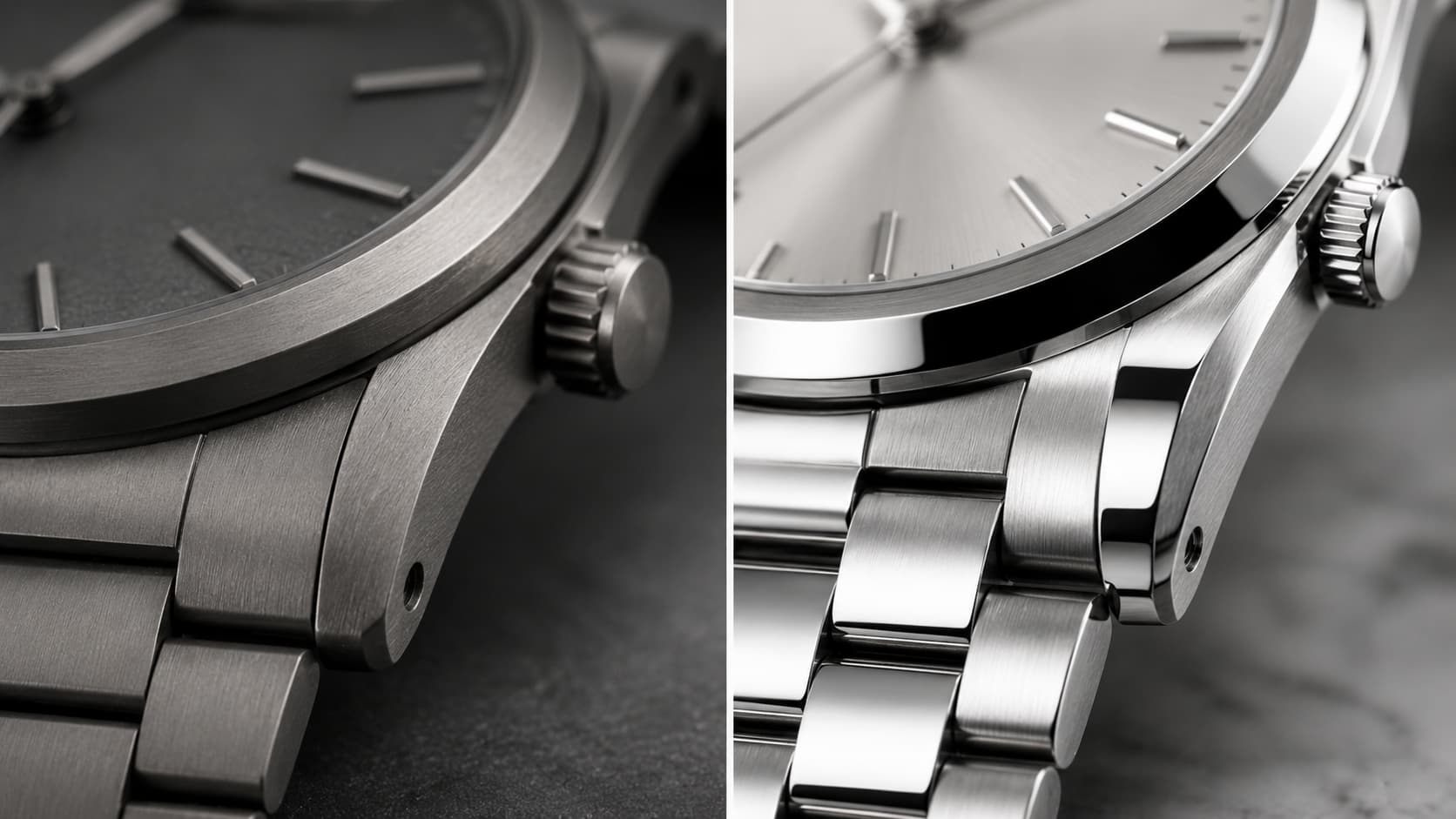
Most luxury watches are made from one of these two metals. The choice sounds technical, yet it changes the daily experience more than almost any other spec. A 44mm titanium diver and a 44mm steel diver can measure identically and feel like different watches. Because of this, understanding the difference is worth a few minutes before you buy.
The Weight Difference
This is the difference you notice first. Grade 5 titanium has a density of roughly 4.4 grams per cubic centimeter. The 316L stainless steel used in most watch cases sits near 7.9. In practice, a titanium watch weighs about 40 percent less than a steel watch of identical dimensions.
Size determines how much that matters. On a 36mm dress watch with a leather strap, the difference is modest. On a 44mm diver with a full metal bracelet, it is substantial across a full day. Titanium suits people who find large watches tiring, or who wear a watch from morning to night. Stainless steel gives a watch heft, and many wearers want exactly that. A watch you feel on your wrist reads as substantial, which is part of the appeal.
Real examples make the point clearly. The Longines Spirit Zulu Time Titanium weighs 95.5 grams with its full titanium bracelet, in a 39mm case with a GMT complication and a ceramic bezel. That is remarkably light for a watch on a metal bracelet. Tudor watches apply the same thinking to a dive watch with the Tudor Pelagos, which pairs a titanium case and bracelet with 500 meters of water resistance. Omega watches use Grade 5 titanium at the extreme end with the Omega Seamaster Planet Ocean Ultra Deep, where the sand-blasted titanium version keeps a 45.5mm case rated to 6,000 meters wearable rather than punishing.

Scratch Resistance and the Grade Question
Titanium has a reputation for scratching easily. That reputation is only half right, and the reason matters.
Watchmakers use two grades. Grade 2 is commercially pure titanium, roughly 99.5 percent, and it is soft. Its Vickers hardness sits around 145, effectively the same as 316L steel at about 150. Grade 5, an aerospace alloy of titanium with aluminum and vanadium, measures around 300 to 350 Vickers. In other words, Grade 5 titanium is meaningfully harder than stainless steel, while Grade 2 is not.
The way marks appear differs too. Steel shows bright, crisp hairlines that catch the light, particularly on polished surfaces. Titanium scuffs instead, and its matte grey surface absorbs the marks. From arm’s length, a scratched titanium case often looks better than a scratched steel one. Up close, it can develop a general haze with heavy wear.
Refinishing is where steel wins clearly. A watchmaker can restore a steel case to near-original condition with standard tools. Titanium requires specific technique and materials, and a poor attempt makes things worse. If you plan to keep a watch for decades and refresh it periodically, that difference is worth weighing. Our watch polishing and refinishing service handles both materials in house.g
Comfort, Skin, and Temperature
Titanium is biochemically inert, which makes it a strong choice for anyone whose skin reacts to metal. Steel contains nickel, and while irritation is uncommon, it does happen.
Temperature behavior is the underrated difference. Titanium moves toward skin temperature quickly and stays there. Steel feels cold when you first put it on and warms slowly. In winter, that first minute is noticeable. Some wearers prefer the cool touch of steel; others find titanium more comfortable year round.

Appearance
Steel is bright. It polishes to a mirror finish, holds crisp brushed surfaces, and reads as traditional luxury. That versatility is why it works on both a dive watch and a dress watch. The Omega Speedmaster Moonwatch Professional shows what steel does well, alternating brushed case surfaces with polished bevels in a way titanium’s matte grey cannot replicate.
Titanium is darker and greyer, closer to gunmetal than silver. It absorbs light rather than reflecting it, which gives titanium watches a quieter, more technical look. Because of this, titanium appears more often on tool watches and sports models than on dress pieces. Neither look is better. They simply suit different tastes and different watches.

Corrosion and Water
Both materials handle water well. Titanium handles saltwater better. It resists corrosion in marine environments more effectively than steel, which is one reason it appears frequently in professional dive watches. For most owners this is a theoretical advantage, since 316L steel is entirely adequate for swimming and daily wear. For someone diving regularly in salt water, it becomes practical.
Price
Titanium generally costs more, and the reason is manufacturing rather than raw material. Titanium is harder to machine, wears out tooling faster, and demands slower production. Those costs reach the retail price. Within a single collection, the titanium version typically carries a premium over the steel one.
That said, movement, complication, and brand position drive price far more than case material. A steel chronograph will outprice a titanium three-hander from the same maker every time.
Which Should You Choose?
Choose titanium if you wear a large watch, keep it on all day, have sensitive skin, or want a quieter, more technical look. Look for Grade 5 if scratch resistance concerns you.
Choose stainless steel if you like the weight of a watch on your wrist, want a bright polished finish, plan to refinish the case over years of ownership, or want the widest possible choice of models.
Are you deciding between two specific watches? Visit our family-owned showroom in Lower Gwynedd to handle both, or browse our selection of used luxury watches online.
Titanium vs Stainless Steel Watch FAQs
Do titanium watches scratch more easily than steel?
It depends on the grade. Grade 2 titanium is about as soft as 316L steel. Grade 5 titanium is roughly twice as hard and resists scratches better than steel. Titanium also hides marks better because its matte surface does not catch light the way polished steel does.
How much lighter is a titanium watch?
About 40 percent lighter than a steel watch of the same size. Grade 5 titanium has a density near 4.4 g/cm³ against roughly 7.9 for 316L stainless steel.
Is titanium hypoallergenic?
Yes. Titanium is biochemically inert and does not trigger metal sensitivities. Stainless steel contains nickel, which causes irritation for a small number of wearers.
Can a titanium watch be polished?
Yes, but it requires specific technique and materials. Steel is considerably easier to refinish. Have titanium refinished by a watchmaker experienced with the material rather than attempting it at home. Our guide to watch polishing explains what the process removes and when to avoid it.
Is titanium worth the extra cost?
It depends on how you wear the watch. On a large case worn all day, the weight savings are meaningful. On a smaller watch worn occasionally, the practical benefit is smaller and the choice comes down to appearance.


